Planned road work gives traffic
control crews days or weeks to design a TCP, coordinate with the DOT, schedule
personnel, and stage equipment. Emergency situations give them none of that. Whether it's a water main rupture under a busy arterial at 2 a.m., a utility pole snaps and
lands across two lanes of a state highway, or a gas leak forces the immediate
evacuation of a commercial block. Traffic control is needed right now, not
after a permit application is approved.
Emergency traffic control is one of the most demanding scenarios in the industry, precisely because the normal planning process is compressed or eliminated. The fundamental requirements are the same as any work zone: workers must be protected from live traffic, drivers must be warned before they reach the hazard, and the road must be managed safely until the emergency is resolved. The difference is that all of it has to be set up fast, often in the dark, often without a pre-designed plan, and often in conditions that are still actively dangerous.
What Is Emergency Traffic Control?
Emergency traffic control
refers to the deployment of traffic management measures in response to an
unplanned incident that creates an immediate hazard on or adjacent to a public
road. Unlike planned work zone traffic control, which is designed in advance
and permitted through normal DOT channels, emergency traffic control must be
deployed rapidly in response to unforeseen conditions.
The core elements are the same
as any work zone: advance warning, channelization to separate workers and
hazards from live traffic, and some form of traffic direction, whether through
flaggers, law enforcement, or a combination. What differs is the sequencing,
the timeline, and the degree of improvisation required.
Emergency traffic control is
not a lesser standard of traffic control. The MUTCD and OSHA requirements do
not have an emergency exception that lowers the bar for worker or driver
safety. What is required for an emergency response is the ability to meet those standards quickly and adapt as conditions on the scene evolve.
|
Key point: OSHA and MUTCD standards apply to emergency work zones the same as planned ones. Speed of deployment does not substitute for compliance. Experienced emergency response crews know how to set up correctly under pressure. |
Common Emergency Situations That Require Traffic Control
Emergency traffic control can
be triggered by a wide range of incidents. The common thread is that a
condition has arisen on or near a public road that poses an immediate risk to the public or workers, and that condition requires traffic to be rerouted,
slowed, or stopped while the emergency is addressed.
Utility emergencies
Utility emergencies are among
the most frequent triggers for emergency traffic control. Water main breaks,
gas line ruptures, electrical cable faults, and telecom outages all require
immediate repairs that often take place in or directly adjacent to the
travel lane. Utility companies operating in AQC's service area across Georgia, Alabama, Tennessee, Florida, and South Carolina typically maintain on-call
traffic control arrangements for exactly this reason.
A water main break can require a full lane or road closure while repair crews excavate and repair the line. A
gas leak may require immediate evacuation of the area and road closure until
the line is secured. Electrical line-down incidents may require traffic to be
stopped entirely until the utility can assess and contain the hazard.
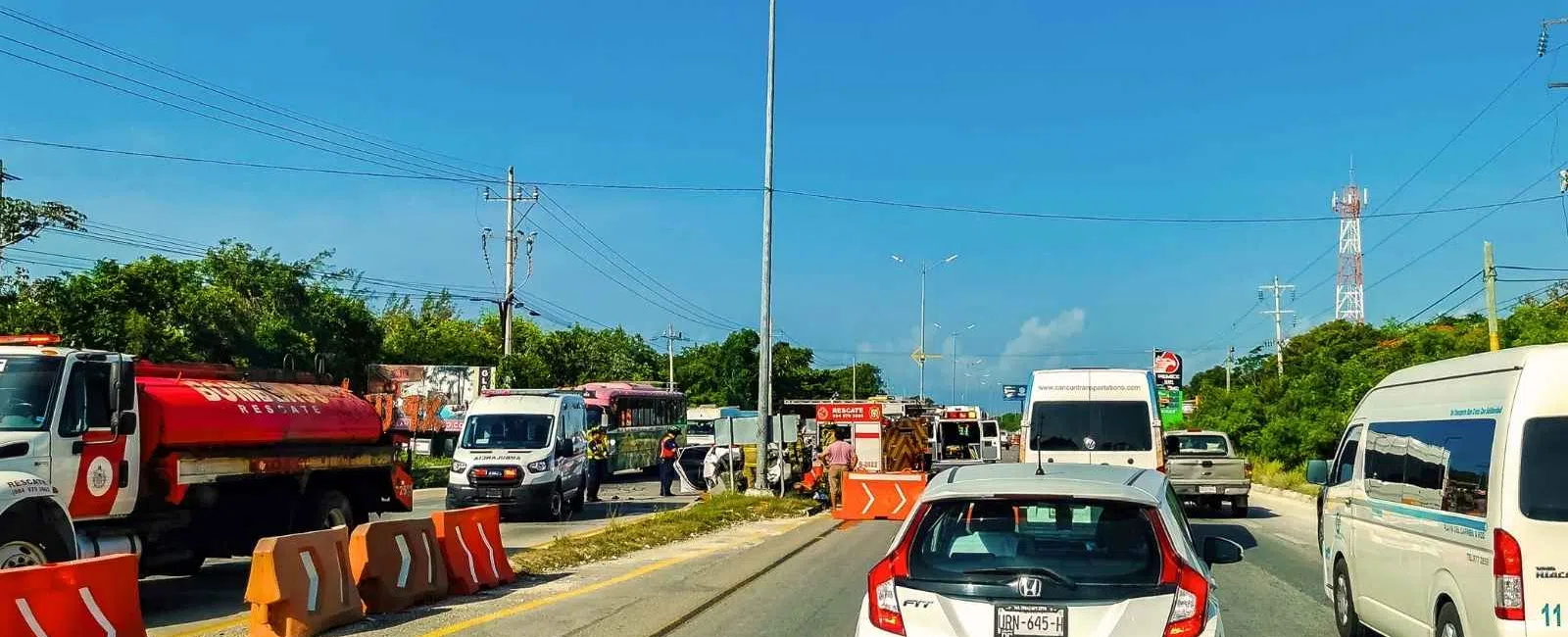
Vehicle accidents and incident scenes
Major vehicle accidents on
public roads require traffic control to manage the backup of vehicles
approaching the scene, protect first responders and crash investigators working
in the roadway, and maintain some level of traffic flow on alternate routes. Law
enforcement typically manages the immediate scene, but when an incident is
serious enough to close a road for an extended period, dedicated traffic
control personnel and equipment are needed to manage the broader traffic
impact.
Secondary crashes at incident
scenes, where vehicles traveling toward the original crash site fail to stop or
merge in time, are a well-documented hazard. Proper advance-warning setup significantly reduces the risk of secondary crashes by alerting drivers well before they
reach the scene.
Storm damage and debris
Severe weather events,
particularly the tornado activity, ice storms, and hurricane-related wind
events common in the Southeast, regularly produce road hazards that require
immediate traffic control. A fallen tree across a travel lane, flooding that
overtops a roadway, or wind damage to an overhead sign structure all create
sudden road hazards that require crews to establish a safe work zone before
debris removal or repair can begin.
Post-storm response often
involves multiple simultaneous incidents across a wide area, requiring a
traffic control company with sufficient personnel and equipment to staff
multiple emergency deployments at once. This is one of the scenarios where
having a pre-established relationship with a regional traffic control provider
is most valuable.
Construction site emergencies
Unexpected conditions during
planned construction can create emergency traffic control needs even on jobs
that already have a TCP in place. A trench collapse that requires emergency
excavation beyond the permitted work area, an equipment failure that leaves
machinery in the travel lane, or an unplanned utility strike all represent
situations in which the existing TCP may need to be modified or expanded immediately.
In these scenarios, the general
contractor must be able to rapidly augment their existing traffic control
setup, which may require calling in additional personnel and equipment on an
emergency basis.
Special event overruns
Planned special events
occasionally require emergency traffic control when actual conditions exceed
what the original event plan anticipated. A larger-than-expected crowd at a
festival, an unplanned road closure due to a vehicle breakdown along a parade route,
or weather that forces an event to end early and creates a surge of departing
traffic can all create situations where additional traffic control resources
are needed immediately.
How Emergency Traffic Control Gets Set Up in the Field
The process for setting up
emergency traffic control differs from planned work primarily due to the absence of a pre-approved plan and a compressed timeline. Here is how experienced
emergency response crews approach it.
Scene assessment on arrival
The first task for any emergency
traffic control crew arriving on scene is assessment. Before any devices are
placed, the crew needs to understand the nature of the hazard, the extent of
the work area, the road geometry and posted speed limit, the current traffic
conditions, and any safety hazards to the crew itself, such as active gas leaks,
downed electrical lines, or unstable structures.
This assessment, which in a
planned work zone takes days during the design phase, must occur in minutes at an emergency scene. Experienced crews know what to look for and can make
rapid decisions about device placement, taper setup, and personnel positioning
based on their observations.
Rapid advance warning deployment
The first priority in any work
zone setup, emergency or planned, is advance warning. Drivers approaching the
scene need to know something is ahead before they are close enough to create a
hazard. On a highway where vehicles are traveling at 65 mph, a driver needs a warning from several hundred feet away to safely reduce speed and merge.
Emergency crews deploy advance
warning signs and, where available, arrow boards and portable message signs as
their first action. Getting warning devices in place before workers are in the
travel lane is a cardinal rule of work zone safety. In emergency scenes, this sequence can be challenging when other responders are already on scene and working, but it is non-negotiable for crew safety.
Channelization and lane closure setup
Once advance warning is in
place, the crew establishes the channelization layout: the taper that moves
traffic away from the work area, the buffer space between the taper and the
work activity, and the delineation of the work area itself. On emergency scenes, the taper and buffer may be shorter than MUTCD standards allow for a permanent
installation because the emergency does not permit the full setup footprint.
MUTCD Part 6 acknowledges that
emergency conditions may require modified setup dimensions, but this is not a
blanket permission to disregard standards. The crew must establish the safest
possible setup given the constraints, document what was done, and expand toward
full compliance as the situation allows.
Flagger deployment and traffic direction
For incidents that require
traffic to be stopped or alternated through a single lane, certified flaggers
are deployed at appropriate positions. On emergency scenes, the number of
flaggers required depends on the extent of the closure and the road configuration.
A single lane closure on a two-lane road typically requires two flaggers for
one-lane alternating traffic control. A full road closure with a detour
requires flaggers or officers at each decision point along the detour route.
In situations where officer
presence is required by the nature of the incident, such as an active accident
scene with an ongoing law enforcement investigation, off-duty police officers may supplement or replace flaggers to direct traffic at key points.
Coordination with other responders
Emergency traffic control crews
do not operate in isolation. On most emergency scenes, police, fire, or EMS are
already present. Effective emergency traffic control requires immediate
coordination with incident command to understand the scope of the closure, who
has authority over which portions of the road, and how the traffic control
setup integrates with the emergency response operation.
Experienced emergency response
traffic control providers understand incident command structure and can
integrate into an active emergency scene without creating confusion or conflict
with other responders. This coordination experience is one of the key differences
between a traffic control company with genuine emergency response capability
and one that only handles planned work.
|
AQC note: AQC provides 24/7 emergency traffic control response across Georgia, Alabama, Tennessee, Florida, and South Carolina. Our crews are trained for rapid deployment and experienced in coordinating with utility companies, municipalities, and emergency responders on active incident scenes. |
What to Look for in an Emergency Traffic Control Provider
Not every traffic control
company has a genuine 24/7 emergency response capability. The difference between
a company that lists emergency response as a service and one that actually
delivers it reliably comes down to several specific factors.
- True 24/7 dispatch: The ability to answer a call at 3 a.m. on a holiday and have crews on the road within a defined response window. This requires on-call personnel, not just an answering service.
- Regional coverage: A provider operating across multiple states in your service area means one call, regardless of where the incident occurs. Fragmented coverage requires multiple provider relationships and creates gaps.
- Adequate equipment inventory: Emergency response requires trucks, cones, drums, arrow boards, signs, and barriers that can be deployed immediately. A provider that is undersupplied for simultaneous incidents will fail when demand peaks during storm events.
- ATSSA-certified personnel: Certification requirements do not change for emergency deployments. All flaggers and traffic control supervisors must hold current credentials regardless of the hour or the urgency.
- Incident command familiarity: Crews that regularly work alongside police, fire, and utility emergency responders understand how to integrate into an active scene without creating conflict or confusion.
- Documented response: Emergency traffic control deployments should be documented with setup logs, personnel records, and photos that support permit compliance and provide a record in the event of a subsequent liability claim.
|
About AQC:
AQC Traffic Control has provided
emergency traffic control response across the Southeast since 2017. We
maintain 24/7 dispatch capability, multi-state coverage across Georgia,
Alabama, Tennessee, Florida, and South Carolina, and crews trained for rapid
deployment on utility, municipal, and construction emergency scenes. |
24/7 Emergency Traffic Control Across the Southeast
Emergencies do not wait for
business hours, and neither does AQC. Whether you are a utility company
managing infrastructure emergencies across multiple states, a municipality
responding to storm damage, or a contractor dealing with an unexpected situation
on a job site, AQC provides rapid-response certified traffic control when you
need it.
Our teams are available around the clock across Georgia, Alabama, Tennessee, Florida, and South Carolina. We maintain the personnel, equipment, and regional coverage to respond to single-incident emergencies and large-scale multi-site events. Contact AQC to discuss an on-call agreement or to get emergency coverage in place before your next unplanned incident requires it.