What Is a Traffic Control Flagger? Roles, Rules & Responsibilities
A traffic control flagger is a certified work zone professional who directs vehicle and pedestrian traffic safely around construction sites, road maintenance operations, and utility work where normal traffic flow is temporarily disrupted. Using standardized signals and MUTCD-compliant equipment, a flagger serves as the active human layer of every temporary traffic control plan, making real-time decisions that protect road workers and the driving public. Federal law under OSHA standard 1926.201(a) requires flagger certification on all covered U.S. work sites, and for good reason: signs and cones alone cannot replace trained human judgment.
What Does a Traffic Control Flagger Do?
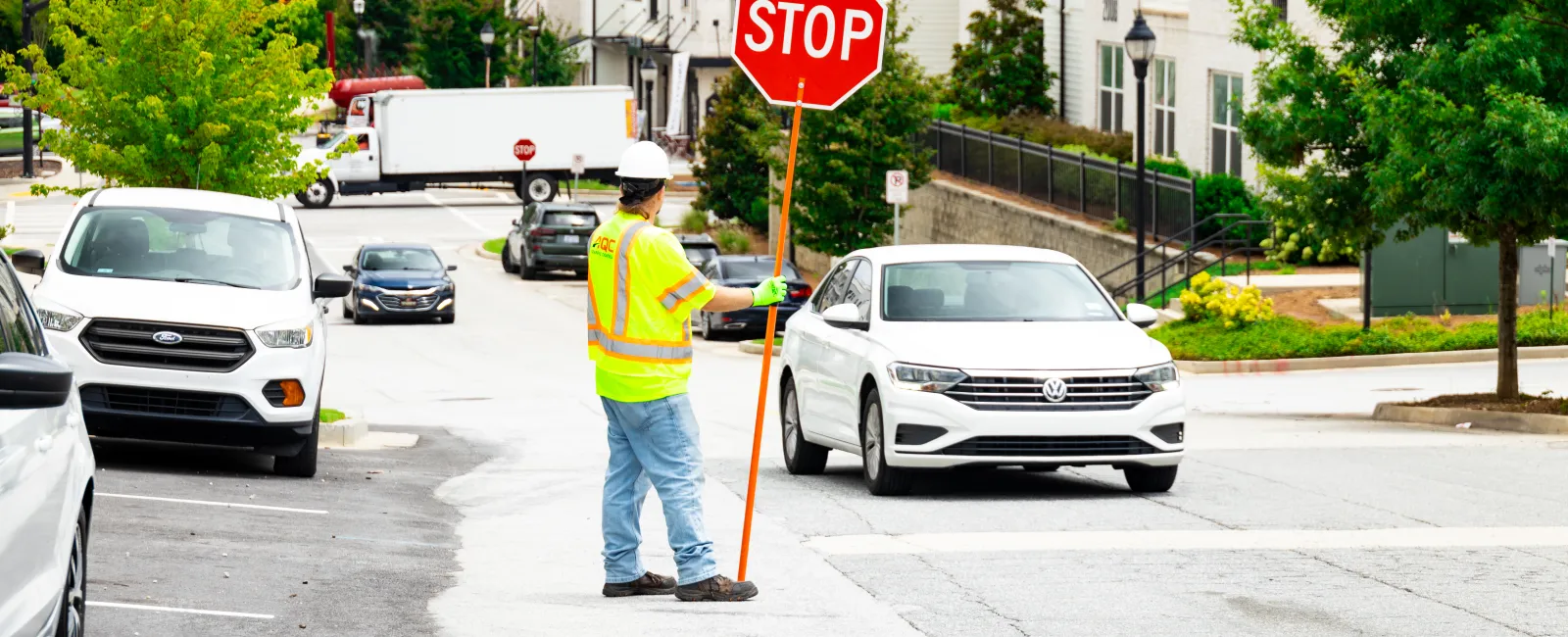
The flagger's job description goes well beyond holding a sign. A certified traffic flagger controls vehicle movement through or past an active work zone, stopping, slowing, and releasing traffic in a coordinated, safe pattern using a Stop/Slow paddle or, in limited circumstances, a red flag.
Think of it like air traffic control. One trained professional manages movement in a high-consequence environment where a single miscommunication creates an immediate collision risk. A flagger who signals unclear on a 55 mph roadway is not making an administrative error; they are creating a crash scenario in real time.
When a lane closure requires single-lane alternating traffic, two flaggers coordinate by two-way radio from opposite ends of the work zone, releasing vehicles in turns so no two directions meet head-on inside the corridor. This is mentally demanding, sustained work across shifts that can run eight or more hours in direct sun and heavy traffic.
Core Responsibilities of a Work Zone Flagger
Directing Traffic
The primary tool is the Stop/Slow paddle, an 18-inch minimum octagonal sign with a red "STOP" face and an orange "SLOW" face, finished in retroreflective sheeting on both sides. Every signal must be visible, deliberate, and timed correctly. Releasing traffic while crew or equipment is still exposed, or stopping traffic too late when a vehicle is already committed to the zone, are errors with life-or-death consequences. The MUTCD sets specific protocols for signal sequencing precisely because the margin for error is so thin.
Coordinating with the Crew
Flaggers communicate with other flaggers, supervisors, and equipment operators to account for when workers need to cross an active lane, when heavy equipment is moving through the corridor, or when conditions require an immediate change to traffic flow. In any work zone where one flagger cannot see the other, radio communication is not optional; it is a safety requirement.
Monitoring Driver Behavior
A meaningful part of what a traffic flagger does is read approaching traffic. Spotting a distracted driver, a vehicle following too closely, or an aggressive approach to a stop signal allows the flagger to signal earlier, adjust their position, or alert the crew before a situation escalates. Rear-end collisions account for approximately 70% of all work zone crashes according to Federal Highway Administration data, and distracted driving contributes to the vast majority of those incidents. An attentive flagger who signals clearly and early gives drivers the best possible chance of stopping in time.
Inspecting Work Zone Devices
Before each shift, flaggers confirm that advance warning signs, cones, and channelizing devices are correctly placed and visible. A shifted sign or blown-over cone reduces the warning time drivers have before entering the work zone, which directly increases the risk of sudden braking and rear-end crashes. The MUTCD specifies minimum advance warning distances by posted speed: at 45 mph, signage must begin at least 500 feet out; at 65 mph, that extends to 1,500 feet or more.
Responding to Emergencies
When a crash, vehicle breakdown, or equipment failure occurs in or near the work zone, the flagger is typically the first person to respond by modifying traffic flow. Preventing vehicles from entering an active incident scene and stopping secondary crashes, those that occur at or near the original incident, is one of the most critical functions a road flagger performs.
OSHA Rules and Flagger Certification Requirements
Federal Law
OSHA standard 1926.201(a) requires every flagger on a covered U.S. construction site to be trained and certified to the standards of Part VI of the MUTCD. A certified flagger must demonstrate competence in TTC zone setup, signaling procedures, communication protocols, PPE use, and emergency response before being deployed. Most flagger certifications are valid for two to three years and require renewal as MUTCD standards evolve.
Importantly, the obligation does not rest on the individual worker alone. Employers and traffic control companies are legally responsible for verifying that anyone performing flagging duties holds a current, valid certification. Deploying an uncertified flagger is not a minor compliance gap; it is a documented OSHA violation that creates direct liability when an incident occurs.
Required PPE
OSHA requires work zone flaggers to wear high-visibility safety apparel meeting ANSI/ISEA 107 standards. Class 2 gear is the minimum on roads where traffic approaches at 50 mph or below. Class 3, which provides the largest retroreflective surface area, is required above 50 mph. On active construction sites, hard hats, safety-toe footwear, and hearing protection near heavy equipment are standard additional requirements. In low-light or nighttime conditions, illuminated wands replace or supplement the standard paddle.
Who Is Required to Be a Certified Flagger?
Any worker whose role involves directing or controlling traffic on a job site must hold current flagger certification. This includes road construction and resurfacing crews, utility installation workers, municipal maintenance crews, survey teams on active roadways, and emergency response personnel managing traffic around incidents. This requirement is broader than most people assume, and the informal assignment of flagging duties to uncertified crew members is a documented source of OSHA violations across the construction industry.
Why Certified Traffic Control Flaggers Matter
The numbers are straightforward. Over 100,000 work zone crashes occur in the United States annually. More than 700 people die in those crashes each year. More than 85% of work zone fatalities are motorists, not workers. Rear-end collisions dominate those statistics, driven by sudden speed changes, inadequate following distance, and driver distraction, all factors that a trained, positioned flagger directly influences.
Clear signaling gives drivers more time to react. Precise coordination between flag stations prevents traffic conflicts inside the work zone. Situational awareness helps a flagger catch developing hazards before they become crashes. None of those outcomes happens reliably without certified training, proper equipment, and a professional who understands the full weight of the role.
A traffic control plan flagger is not a temporary placeholder in a safety plan. They are the most active, most visible, and most consequential person in a work zone, making decisions in real time that determine whether everyone on that job site goes home safely. Just add this to the bottom of the article:
AQC Traffic Control provides ATSSA-certified flagging services and comprehensive work zone management across metro Atlanta and the Southeast. Whether you need certified flaggers for a lane closure, a full traffic control plan, or emergency response coverage, our team has the training, equipment, and experience to keep your job site compliant and your workers protected. Call us or request a quote online to discuss your traffic control needs.


The Most Common Work Zone Collision (And How to Prevent It) Prev
Traffic Control Certification: What It Is & Why It Matters Next