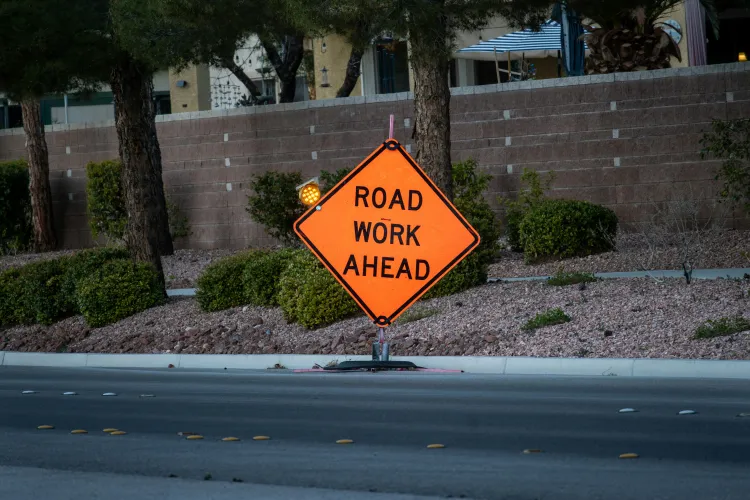
Failure to obey a traffic control device is a traffic violation for disregarding an official sign, signal, pavement marking, or other device placed by the agency that controls the road. That includes the temporary signs, cones, barricades, and flagger paddles in a work zone, which carry the same legal weight as a permanent stop sign. Most states word the law almost identically, but the penalties and the name on the ticket vary by state.
Drivers usually picture a red light when they hear this charge. In practice, a lot of these tickets come from work zones, where people assume temporary equipment is a suggestion.
What Is Failure to Obey a Traffic Control Device?
State traffic codes follow a common model. The driver of any vehicle has to obey the instructions of any official traffic control device that applies to them, unless a police officer directs otherwise. Depending on the state, the citation may read "failure to obey," "disobeyed traffic control device," or "disregarding a traffic control device." They describe the same kind of offense.
The word that matters is "official." A device counts when it was placed by, or under the authority of, the public agency or official with jurisdiction over the road. On a private road open to public travel, the private owner holds that authority. That standard comes from the Manual on Uniform Traffic Control Devices (MUTCD), the federal rulebook every state builds its signing rules on.
What Counts as a Traffic Control Device
The MUTCD defines traffic control devices as all signs, signals, markings, and other devices used to regulate, warn, or guide traffic, placed on, over, or next to a street, highway, pedestrian facility, bikeway, or private road open to public travel. That covers more than most drivers expect:
- Regulatory signs such as STOP, YIELD, DO NOT ENTER, ROAD CLOSED, and speed limits
- Traffic signals, including temporary signals at a work zone
- Pavement markings like solid lane lines, stop bars, and gore areas
- Channelizing devices such as cones, drums, and tubular markers that close a lane or form a taper
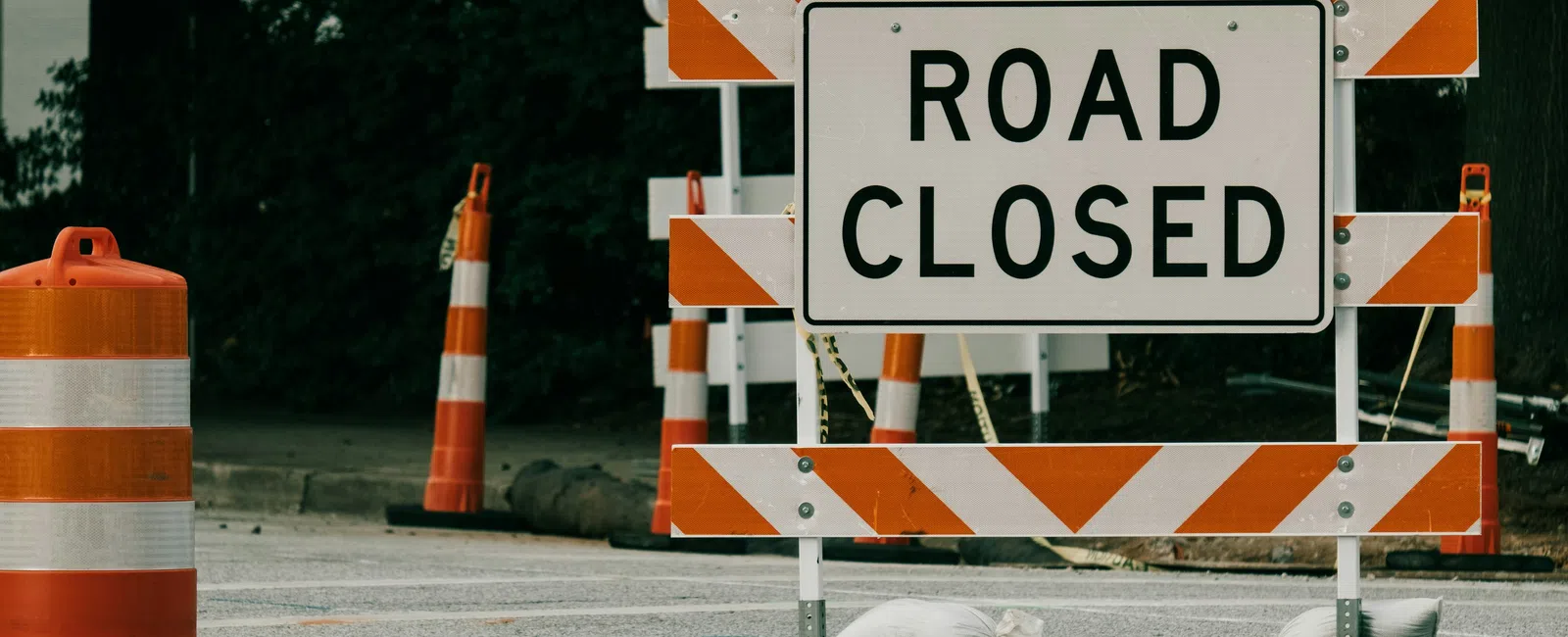
- Barricades placed across a closed road or ramp
- The STOP/SLOW paddle a flagger uses to hold and release traffic
Warning signs, the yellow and orange diamonds, are traffic control devices too. A driver usually gets cited for ignoring a regulatory device, though, because that's the one telling you what you must or must not do.
Work Zone Devices Count Just as Much
A traffic control setup in a work zone isn't something the crew made up that morning. On public roads, closures are typically built from a traffic control plan reviewed by the road owner and covered by a permit, which is what gives the temporary devices their official status. A ROAD CLOSED sign on a barricade is a regulatory sign, and driving around it is a violation the same way running a stop sign is.
The objection we hear most often is that the cones looked abandoned because nobody was working. A closure often stays in place overnight or over a weekend because the hazard stays too: an open trench, a pavement drop-off, fresh concrete, or a lane that isn't ready for traffic. Some state codes also presume that a device placed in substantial conformity with the law was placed by lawful authority, so "it looked unofficial" is a weak argument against equipment set up to standard.
Do Drivers Have to Obey a Flagger?
In most work zones, the flagger is the traffic control. The paddle is the device, and the flagger's job is to decide when it shows STOP and when it shows SLOW. Some states go further and write flagger authority directly into the traffic code. At least one state lets a trained work zone flagger report a driver who ignores their instructions, with the vehicle description, plate number, and time, and lets police issue a citation from that report. See OSHA Flagger Requirements: What the Rules Say for more details.
A police officer's directions sit above everything else. The general rule says drivers obey devices unless an officer directs otherwise, which is why projects that need a signal overridden, or that run through a busy signalized intersection, often bring in a sworn officer.
Common Ways Drivers Get This Ticket
In a work zone, the situations that lead to this charge are predictable:
- Driving around a ROAD CLOSED barricade instead of following the detour
- Moving into a closed lane through the cone taper to get past a backup
- Proceeding while a flagger is showing STOP, or going before the flagger releases traffic
- Ignoring a temporary signal on a one-lane, two-way section
- Cutting through a parking lot or gas station to avoid a signal or a closure, which some states treat as its own violation
Outside work zones, the usual causes are turning where a sign prohibits it, crossing a solid line or gore area, and missing a stop sign or stop bar.
Penalties Vary by State
Failure to obey a traffic control device is typically a lower-level traffic offense, but the details depend on where you're driving. In some states a first offense is a minor misdemeanor, and the charge steps up if the driver has other traffic convictions within the past year. Some states also set higher fines when the violation happens in an active work zone. Whether the ticket adds points to your license, and how many, is also a state-by-state question.
If you've received one of these tickets and want to know how it will be handled, your state's traffic code and a local traffic attorney are the right sources. Nothing here is legal advice.
When a Traffic Control Device Isn't Enforceable
Most state codes include a condition that surprises people. A rule that depends on a sign can't be enforced if, at the time and place of the violation, the sign wasn't in its proper position and legible enough to be seen by an ordinarily observant person. A stop sign hidden behind an overgrown tree, or a work zone sign that was knocked flat, may not support a ticket the way a properly placed one would.
That condition cuts both ways for contractors. Setup quality isn't only a safety issue. A sign that was turned sideways by wind, a barricade dragged off the road, or a closure that doesn't match its approved plan weakens the legal footing of the whole setup, and the contractor is the party responsible for keeping it right.
How AQC Keeps Work Zone Devices Enforceable
AQC Traffic Control builds closures that hold up, on the road and on paper. Our traffic control plans and permits team develops MUTCD-compliant plans and coordinates permits with the agencies that own the road. Our flagging and lane closure crews are ATSSA-certified and set and maintain closures so the devices in the field match the plan. When a job needs a sworn officer, we coordinate off-duty police officers for traffic control. For crews that run their own zones, our equipment rentals include road closure signs and stands, barricades, cones, channelizers, and flagging equipment.
Planning a closure? Request a quote or call 470-480-0348 to talk with our team.