What Does a Detour Sign Mean?
A detour sign tells drivers that the road ahead is closed or partly blocked and that they need to follow an alternate route. The word "detour" comes from the French détourner, which means to turn away. That is exactly what the sign asks you to do: turn away from your usual path and follow a marked route to get back on track.
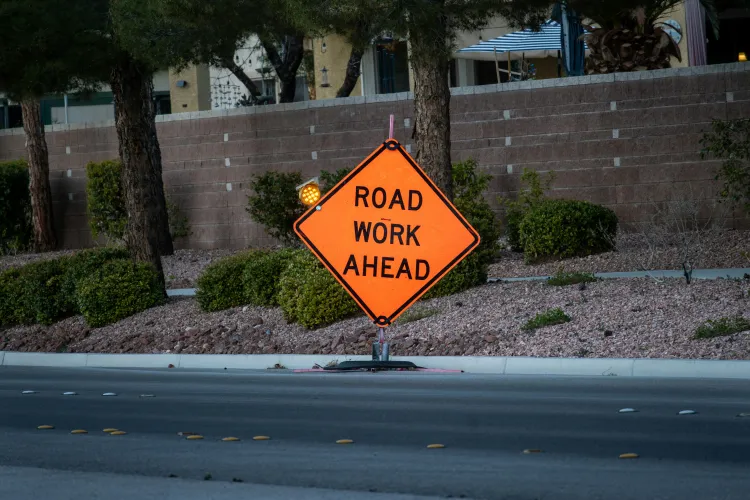
Standard detour signs are orange with black letters and a directional arrow. In the federal Manual on Uniform Traffic Control Devices (MUTCD), they belong to the M4 sign series. Orange always signals a temporary condition, usually construction or maintenance. So when you see a detour ahead sign, think short term. The road will reopen once the work wraps up.
What color is a detour sign?
Most detour signs are orange because they mark a temporary work zone. But you may also spot smaller colored detour markers near highways, shaped like shields or rectangles with letters and numbers in blue, green, or red. Those mark emergency or permanent detour routes that state agencies set up ahead of time for when an interstate shuts down. Same basic idea, just a longer lifespan.
The Detour Sequence, Sign by Sign
A single detour sign rarely works alone. Crews place a series of signs so drivers get plenty of warning before the turn. Here is the typical order:
- Detour Ahead sign. The first heads-up, often a few hundred feet before the closure. It warns drivers that a change is coming.
- Get Ready to Detour sign. A friendly nudge to slow down and pay attention. This get ready to detour sign gives drivers time to react instead of slamming on the brakes at the last second.
- Detour 1000 Ft sign. A distance countdown (sometimes 500 ft) so people know exactly where the turn is.
- Directional arrow signs. The M4-10 arrows that point left, right, or straight along the alternate route. These do the heavy lifting.
- End Detour sign. The all clear, letting drivers know they have rejoined their original road.
Each sign builds on the one before it. Miss a single arrow and a driver can sail right past the turn, so spacing and order genuinely matter.
Why Detours Get Set Up in the First Place
Detours are not random inconveniences dreamed up to ruin your morning. They exist for solid reasons:
- Road construction or resurfacing that closes a lane or the whole road
- Utility work like water, gas, or fiber installation
- Bridge repairs and inspections
- Special events such as parades, races, and festivals
- Emergencies like crashes, flooding, or downed power lines
In every case the goal is the same: route traffic safely around a hazard while crews do their job. A well-planned detour protects drivers and the workers on site at the same time.
How Traffic Control Crews Plan a Detour
Setting up a detour is part science, part field experience. It starts with a traffic control plan, a document that maps out every sign, cone, and barricade before a single one touches the ground.
Here is what goes into a safe setup:
- Pick the route. Planners choose an alternate road that can handle the extra cars and trucks without creating a brand new bottleneck.
- Follow the MUTCD. Sign type, size, color, and spacing all follow federal and state standards, so drivers see the same clear messaging no matter where they are.
- Build in advance warning. Signs go up well before the closure so drivers have time to read, react, and reroute calmly.
- Add channelizing devices. Cones, drums, and barricades guide cars along the new path and keep them out of the work area.
- Station flaggers when needed. At tricky intersections or tight closures, a certified flagger directs traffic by hand.
- Inspect and maintain. Crews check the detour day and night, standing up knocked-over signs and adjusting as the job changes.
Get any one of these wrong and the detour turns confusing fast, which is exactly where accidents happen.
Quick Tips for Drivers Hitting a Detour
- Slow down the moment you see that first detour ahead sign.
- Follow the arrows, not your GPS. Map apps often have no idea about a fresh closure.
- Watch for workers and flaggers, and obey their signals.
- Stay patient. The detour is there to keep everyone safe, the road crew included.
Need a Detour Done Right?
A messy detour frustrates drivers and puts workers at risk. A clean one barely gets noticed, which is the entire point. At AQC Traffic, our ATSSA-certified crews design and set up detours across metro Atlanta and the Southeast, from a single lane closure to a full road shutdown. We handle the plan, the permits, the signs, and the flaggers so your project keeps moving.
Planning a closure that needs a detour? Request a quote online or call us, and let's map out a safe route together.