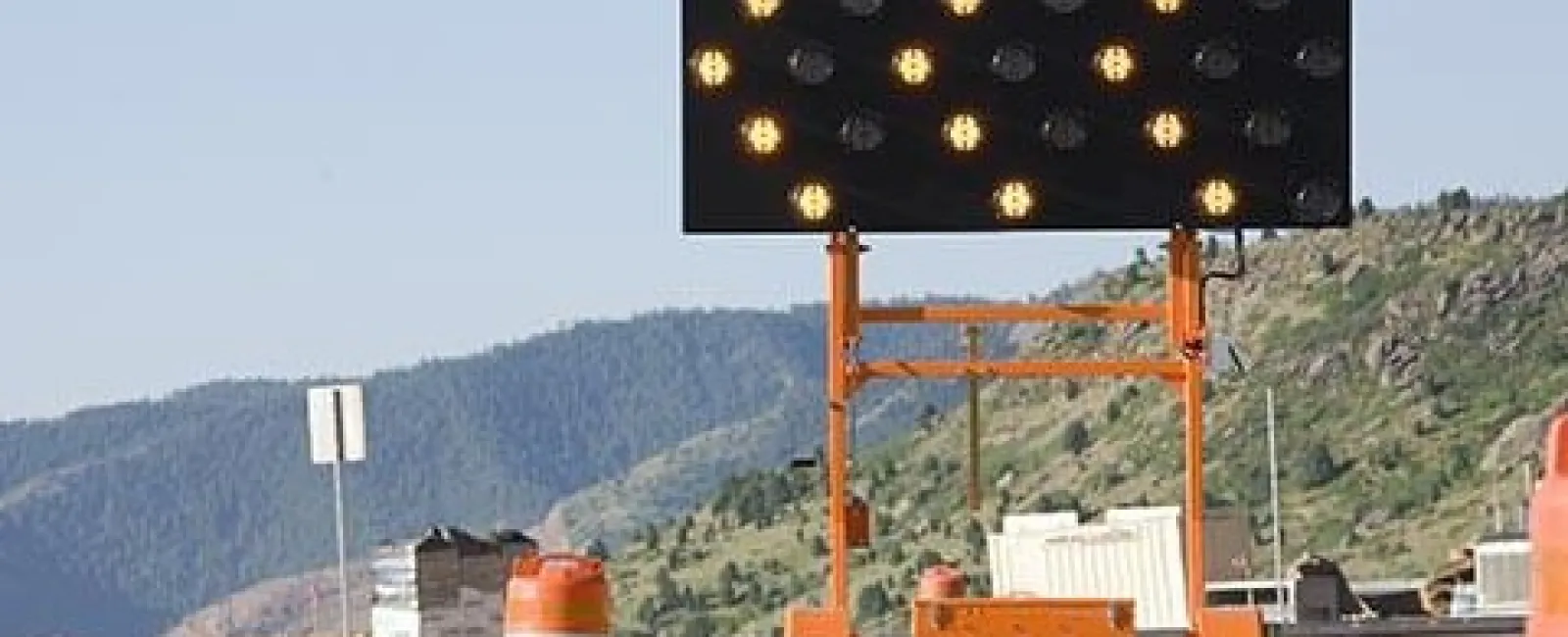
If you've driven through a highway construction zone, you've likely seen them: large electronic signs mounted on trailers or trucks, displaying bright yellow or orange arrows that flash in specific patterns to guide traffic. These devices are called arrow boards, and they're one of the most critical tools in modern work zone traffic control.
At AQC Traffic Control, arrow boards are essential equipment in our traffic management arsenal. As ATSSA-certified traffic control professionals serving metro Atlanta and the Southeast, we deploy arrow boards daily on projects ranging from short-term lane closures to long-duration highway construction. Understanding what arrow boards are, how they work, and why they're so important can help both contractors and drivers appreciate their role in work zone safety.
Arrow Board Definition: What Exactly Is It?
An arrow board (also called an arrow panel, message board, or sequential arrow board) is an electronic traffic control device that displays illuminated arrows, chevrons, or messages to guide drivers through or around work zones. These boards use LED lights or fiber-optic technology to create highly visible directional patterns that indicate which way to move, when to merge, and where lanes are closed.
Arrow boards are governed by the MUTCD (Manual on Uniform Traffic Control Devices), which specifies their design, size, placement, and operation standards. When our team creates comprehensive traffic control plans, arrow boards are often a required component for projects on high-speed roadways or those involving lane closures.
Why "Arrow Board" Instead of Just "Sign"?
The term "board" distinguishes these electronic displays from static signs. Unlike traditional fixed signs that provide one unchanging message, arrow boards are dynamic devices that can:
- Display multiple different patterns and messages
- Create motion through sequential lighting
- Operate day and night continuously
- Be programmed for specific traffic control applications
- Attract attention through animated patterns
This dynamic capability makes arrow boards far more attention-grabbing than static signs, critical when you need drivers to quickly recognize and respond to changing traffic patterns.
Standard Arrow Board Patterns and What They Mean
Arrow boards can display various patterns, each with a specific meaning. When we deploy arrow boards as part of our traffic control operations, we select patterns based on the specific traffic management need:
Common Arrow Board Patterns
Right/Left Arrow (Sequential): Arrows pointing right or left that appear to move in that direction. This pattern tells drivers to merge or move into the indicated lane. Most commonly used for lane closures where traffic must shift left or right.
Right/Left Chevron: V-shaped chevrons that point in one direction. Similar to arrows, but creates a different visual effect. Often used when multiple arrows might be confusing.
Double Arrow (Caution): Arrows pointing both left and right alternately, creating a "bouncing" effect. This pattern means "use caution" and indicates the work zone area, but doesn't specify a particular direction. Often placed at the beginning of work zones or around equipment.
Four Corner Pattern: Lights illuminate the four corners of the board in alternating order. This creates maximum attention-getting effect and indicates "extreme caution" or "slow down significantly." Used for high-hazard areas or when work is directly in the roadway.
Flashing Double Arrow: Both left and right arrows flash simultaneously. Similar to the alternating double arrow, but creates even more urgency. Indicates drivers should slow down and proceed with extreme caution.
Blank/Dark: All lights off. Used when the board is in place but the hazard it's warning about is temporarily not present (such as during equipment moves or crew breaks).
When to Use Each Pattern
Pattern selection depends on the specific traffic control scenario:
- Lane closure with merge: Directional arrow (right or left)
- Shoulder work near traffic: Double arrow (caution)
- Mobile operation (moving equipment): Four corner or flashing patterns
- Work directly in travel lanes: Four corners with reduced speed ahead
- Taper approach: Directional arrow pointing toward open lanes
Where Arrow Boards Are Required
Arrow boards aren't optional decoration; they're required equipment for many work zone scenarios. MUTCD and state DOT regulations specify when arrow boards must be used:
Mandatory Arrow Board Situations
- Lane closures on multi-lane roads: Especially where speeds exceed 45 mph
- Highway work zones: Most state DOTs require arrow boards on limited-access highways
- Mobile operations on high-speed roads: Moving maintenance or construction equipment
- Night work on major roads: Enhanced visibility when traffic volumes are lower but speeds higher
- Complex traffic shifts: Where drivers need clear directional guidance
Recommended (But Not Always Required)
- Shoulder work on highways where traffic passes close to workers
- Urban arterial streets with high traffic volumes
- Areas with limited sight distance approaching work zones
- Long-duration work zones where driver familiarity might lead to complacency.
Arrow Boards vs. Other Traffic Control Devices
Arrow boards work alongside other traffic control equipment, each serving specific functions:
Arrow Boards vs. Static Signs
Traditional signs provide information but arrow boards create attention-getting motion. Static signs are essential for regulatory messages and permanent warnings, but arrow boards excel at guiding traffic through temporary, changing conditions.
Arrow Boards vs. Message Boards
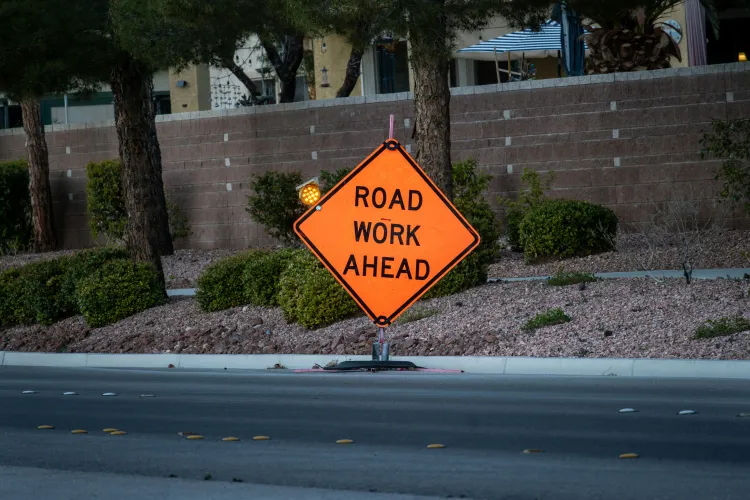
While similar in appearance, full matrix message boards display text messages ("ROAD WORK AHEAD," "LANE CLOSED," "DELAY 15 MIN"). Arrow boards are simpler, dedicated specifically to directional guidance. Many large-format boards combine both capabilities.
Arrow Boards vs. Cones and Barrels
Channelizing devices (cones, drums, barriers) physically guide vehicles and define travel paths. Arrow boards provide advanced warning and direction before drivers reach the channelizing devices. They work together, the arrow board warns and directs, and the cones physically channel traffic.
Operating and Maintaining Arrow Boards
Proper operation and maintenance ensure arrow boards function when needed:
Daily Operation Checklist
- Verify correct pattern is displayed
- Check that all lights are functioning (no burned-out sections)
- Confirm brightness is appropriate for time of day
- Ensure solar panels are clean and unobstructed
- Verify battery charge level is adequate
- Check that board is properly angled and positioned
- Ensure trailer jacks are stable and board isn't tilting
Regular Maintenance
- Clean solar panels weekly (or as needed)
- Inspect wiring and connections for damage
- Test battery capacity periodically
- Lubricate trailer components
- Verify pattern control system functions correctly
- Check reflective striping on trailer
- Inspect tires and trailer lights for highway compliance
At AQC, our equipment maintenance program ensures that every arrow board we deploy operates reliably throughout the project.
Arrow Board Rental vs. Purchase
Contractors planning work zones face a decision: rent or buy arrow boards?
When to Rent
Arrow board rental makes sense for:
- Infrequent traffic control needs
- Short-duration projects (days to weeks)
- One-time special projects
- Testing before purchasing
- Avoiding maintenance and storage responsibilities
Rental also includes professional support. When you rent from traffic control companies like AQC, you often get advice on proper placement and operation as part of the service.
When to Purchase
Buying arrow boards makes financial sense for:
- Contractors who regularly work on roadways
- Municipal maintenance departments
- Utility companies with ongoing roadway work
- Long-duration projects (months to years)
However, purchasing means you're responsible for maintenance, storage, and ensuring you have the right size and type for each application.
Full-Service Traffic Control
Many contractors find the best solution is hiring comprehensive traffic control services that include arrow boards as part of a complete package. This approach provides professional equipment, proper placement, regulatory compliance, and often ATSSA-certified flaggers, all without capital investment or maintenance concerns.
Arrow Boards and Work Zone Safety Statistics
Arrow boards significantly improve work zone safety when properly deployed:
- Studies show proper arrow board use reduces work zone crashes by up to 30%
- Driver recognition of lane closures improves by 40-50% with arrow boards vs. signs alone
- Earlier merging behavior reduces dangerous last-second lane changes
- Worker exposure to traffic is reduced when traffic flows smoothly through clearly marked zones
These statistics reinforce why arrow boards are required equipment on many projects; they genuinely save lives.
Regulations and Compliance
Arrow board use is governed by multiple regulatory frameworks:
Federal Standards (MUTCD)
The Manual on Uniform Traffic Control Devices provides national standards for arrow board design, size, patterns, and placement. Compliance is mandatory for all work on public roads.
State DOT Requirements
Many states have additional requirements beyond federal standards, including:
- Specific size requirements for different road types
- Pattern restrictions or requirements
- Placement distance standards
- Certification or permitting for arrow board operators
OSHA Considerations
While OSHA doesn't specifically regulate arrow boards, work zone traffic control falls under their worker protection requirements. Proper traffic control planning, including arrow boards, helps ensure OSHA compliance.
Professional Traffic Control: More Than Just Equipment
Arrow boards are critical tools, but effective work zone safety requires more than just equipment; it requires expertise. When you work with professional traffic control companies like AQC, you get:
- ATSSA-certified expertise: Our team knows not just how to operate arrow boards, but when and where to deploy them for maximum effectiveness
- Regulatory compliance: We ensure your traffic control meets all MUTCD, DOT, and OSHA requirements
- Complete systems: Arrow boards integrated with signs, cones, barriers, and flaggers as needed
- Maintained equipment: Properly functioning, clean, charged arrow boards ready for deployment
- Liability protection: Professional installation and monitoring reduce your project risk
Arrow boards are powerful safety tools when used correctly. Amateur placement and operation can actually create hazards rather than prevent them.
Need Arrow Boards or Complete Traffic Control for Your Project?
AQC Traffic Control provides comprehensive traffic management services throughout metro Atlanta and the Southeast, including the deployment of professional arrow boards as part of complete traffic control solutions.
Our ATSSA-certified team handles everything from traffic control planning and permitting to equipment deployment and certified flaggers. We ensure your project maintains safety, compliance, and traffic flow.
Call us at 470-480-0348 or request a quote online to discuss your traffic control needs.