There are situations where a
certified traffic control flagger is not enough. High-traffic intersections,
large public events, utility emergencies on busy corridors, and certain permit
requirements all call for the presence of a sworn law enforcement officer with
the legal authority to direct traffic and enforce compliance.
Off-duty police officers can be
hired for exactly these purposes. But the process is not as simple as calling
your local police department and asking for a body. There are rules on how officers are hired, what they can and cannot do while working off-duty, how compensation works, and when you actually need one versus when a certified flagger will suffice.
This guide breaks down
everything contractors, event organizers, project managers, and property owners
need to know about hiring off-duty officers for traffic control and event
management in the Southeast.
What Is an Off-Duty Police Officer for Hire?
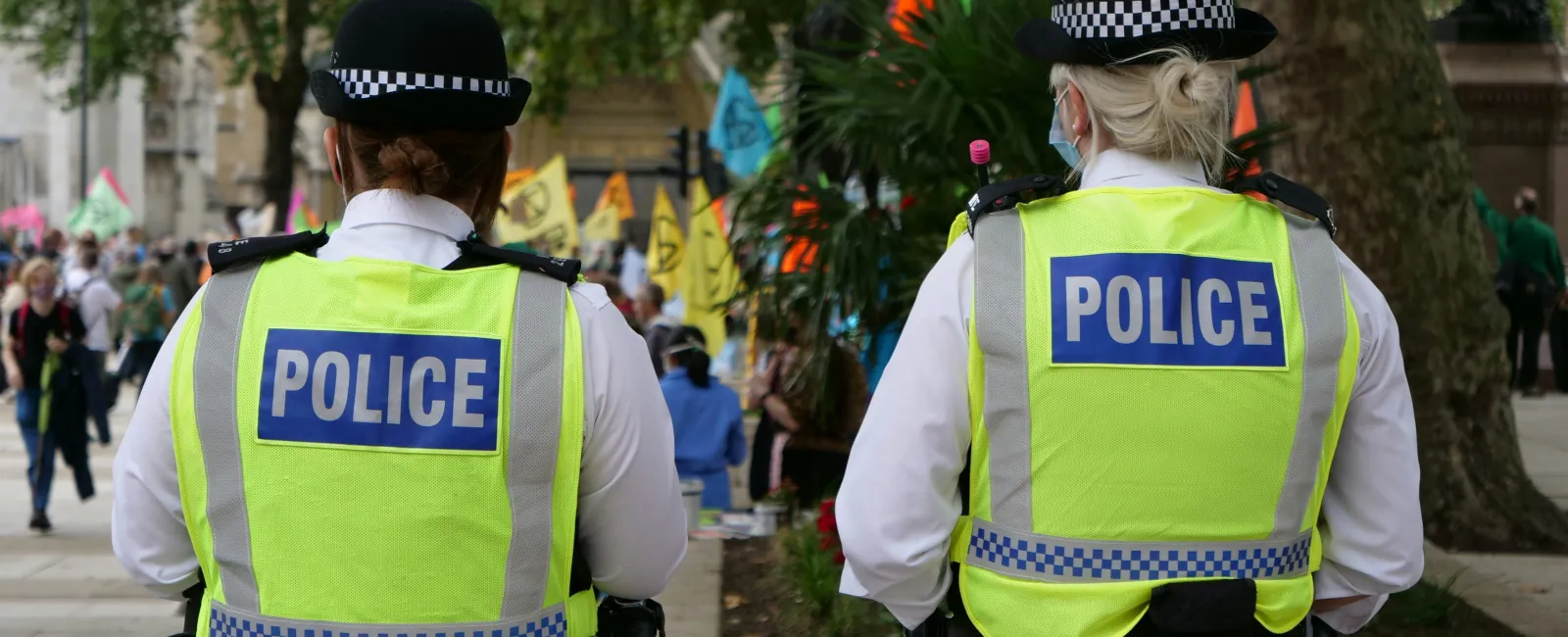
An off-duty police officer is a
sworn law enforcement officer working a secondary employment assignment outside
of their regular department shift. They are still legally sworn officers with
the authority to make arrests, enforce traffic laws, issue citations, and
direct vehicle movement with the force of law behind their instructions.
This is the key distinction
from a private security guard or a certified traffic flagger. A flagger can
stop and direct traffic using MUTCD-approved signals, but they have no legal
enforcement authority. A driver who ignores a flagger is creating a hazard. A
driver who ignores a sworn officer directing traffic may be committing a
traffic violation subject to citation.
Off-duty assignments are common
across the construction, utility, event, and private security industries.
Officers work them voluntarily, typically at an hourly rate paid by the hiring
party rather than the department.
When Do You Need an Off-Duty Officer vs. a Certified Flagger?
This is the most common
question contractors and event organizers ask. The answer depends on the
jurisdiction, the permit requirements, and the nature of the work or event.
When a flagger is sufficient
For the majority of roadwork and lane-closure situations, a certified flagger meets both OSHA requirements and state DOT standards. This includes:
- Utility work requiring a partial or full lane closure on a local or arterial road
- Construction or paving operations with a standard traffic control plan in place
- Fiber, telecom, or water/sewer work on streets with moderate traffic volumes
- Events where flaggers are directing traffic in parking areas or on private property
In these situations, a
certified flagger operating under a properly designed traffic control plan is
compliant, effective, and the standard approach. Using an off-duty officer when a flagger would suffice adds unnecessary cost.
When an off-duty officer is required or strongly recommended
Certain conditions require or
strongly call for a sworn officer's presence:
- Permit requirements: Some municipalities and jurisdictions require a sworn officer for any work on state highways, high-speed corridors, or intersections with traffic signals. Always review your permit conditions before assuming a flagger is sufficient.
- Intersection control: When a traffic signal must be taken out of operation or when traffic flow through a signalized intersection needs to be manually managed, officers are typically required because their authority supersedes the signal.
- High-speed roadways: Work on interstate highways or roads with posted speeds above 55 mph often requires officer presence, particularly in states with specific roadway worker protection statutes.
- Large public events: Parades, marathons, festivals, and stadium events that require road closures or significant traffic rerouting on public streets typically require sworn officer presence as a permit condition.
- Non-compliant driver environments: In locations where driver compliance with flaggers has historically been a problem, officers exercise enforcement authority to deter violations.
- Emergency scenes: Active accident scenes, utility emergencies, and hazmat situations where police may already be present often require coordination with off-duty officers to manage the broader traffic impact.
|
Important: If your traffic control permit specifies a sworn officer requirement and you deploy only a flagger, you are in violation of your permit. This can result in work stoppage, fines, and liability exposure if an incident occurs. |
How to Hire an Off-Duty Police Officer: The Process
Hiring an off-duty officer is
not as simple as finding a name and making a call. Most departments have formal
processes, and the rules vary significantly by jurisdiction.
Option 1: Through the police department directly
Many municipalities have an
off-duty employment office or coordinator that manages secondary employment
requests. You submit a request specifying the date, time, location, nature of
the assignment, and number of officers needed. The department then assigns
available officers or approves the assignment.
This route gives you officers
operating under their department's secondary employment policy, which typically
includes liability coverage through the department. However, it also means you
are subject to the department's scheduling constraints, minimum hour
requirements, and administrative processes. Lead times of several days to a
couple of weeks are common for planned work.
Availability can also be a
limiting factor. Not every department has officers available for every shift,
and in smaller jurisdictions, the pool of available officers may be thin.
Option 2: Through a licensed traffic control company
Traffic control companies like
AQC coordinate off-duty officer assignments as part of a broader traffic
management solution. This approach is particularly useful when your project or
event requires a combination of officers and flaggers, or when you need
coordination across multiple departments or jurisdictions.
Working through a traffic
control provider means one point of contact, integrated planning with your
overall traffic control setup, and coordination of officer assignments
alongside flaggers, signage, lane closures, and equipment. For complex projects
or multi-day events, this integrated approach is significantly simpler than
managing officer and flagger arrangements separately.
AQC has established
relationships with off-duty officers across our service area in Georgia,
Alabama, Tennessee, Florida, and South Carolina, which allows us to staff
assignments more reliably than going through department channels alone.
Option 3: Direct hire through an officer placement platform
Several online platforms exist
that connect requestors directly with off-duty officers. These can work for
straightforward assignments, but you must verify that each officer is
operating under an approved secondary employment arrangement with their department.
An officer working an off-duty job without department approval may not carry
department liability coverage, which creates exposure for you as the hiring
party.
What to Expect During an Off-Duty Officer Assignment
An off-duty officer working a
traffic assignment is still a sworn officer. They are in uniform, driving a
marked or unmarked patrol vehicle, and carrying their service
weapon. They have full law enforcement authority during the assignment.
For traffic control purposes,
this means:
- They can legally stop vehicles and direct traffic flow at intersections or work zones
- They can issue citations for failure to obey traffic control or for speeding in a work zone
- They can respond to an incident on-scene if one occurs during the assignment
- They are not under the operational direction of your foreman or site supervisor - they exercise their own judgment as sworn officers
That last point is important.
You can brief an officer on the assignment parameters, the traffic control
plan, and the specific needs of the job. But you cannot direct an officer to
take or withhold enforcement action. They operate independently within the
scope of their authority.
|
Note: Off-duty officers are typically required to respond to emergencies or crimes in progress that occur during their assignment, even if it means temporarily leaving your work zone. Build this contingency into your traffic control plan so that flagger backup is available if needed. |
How Compensation Works for Off-Duty Officers
Off-duty officer compensation
is set by department policy, not by negotiation. Most departments establish a
minimum hourly rate for secondary employment that reflects the officer's rank
and the nature of the assignment. Rates vary by department, city, and state.
Common billing considerations
include:
- Minimum shift requirements: Most departments require a minimum of 2 to 4 hours per assignment, regardless of actual time on site
- Vehicle fees: If a marked patrol unit is required or used, there may be an additional hourly fee for the vehicle
- Supervisor requirements: Larger assignments with multiple officers may require a supervisory officer at a higher rate
- Overtime restrictions: Some departments limit off-duty hours to prevent fatigue-related issues, which affects availability for extended assignments
- Holiday and weekend rates: Many departments charge premium rates for off-duty assignments on holidays or weekends
When budgeting for officer
coverage, factor in these minimums and potential premiums. The overall cost of
off-duty coverage is higher than flagging, which is why understanding when each
is required matters for project planning.
Off-Duty Officer vs. Certified Flagger: A Side-by-Side Comparison
Understanding the practical
differences helps you make the right call for your specific situation:
|
Factor |
Off-Duty
Police Officer |
Certified
Flagger |
|
Legal authority |
Full enforcement power, can
issue citations |
Traffic direction only, no
enforcement authority |
|
Intersection control |
Can override or replace
traffic signals |
Cannot legally control
signalized intersections |
|
Driver compliance |
High; backed by law
enforcement presence |
Moderate; relies on
voluntary compliance |
|
Permit requirement |
Required by some permits
and jurisdictions |
Sufficient for most
standard work zone permits |
|
OSHA compliance |
Satisfies flagger
requirement |
Satisfies OSHA 1926.201
requirements |
|
Availability |
Subject to department
scheduling and approval |
Readily available through
traffic control company |
|
Relative cost |
Higher; department-set
minimum rates apply |
Lower; standard hourly
traffic control rate |
|
Best for |
High-speed roads, signal
intersections, events |
Most lane closures, utility work, standard jobs |
State-by-State Notes for the Southeast
Requirements for officer
presence vary by state and sometimes by municipality. Here is a general
overview of the states AQC serves:
Georgia
GDOT requires the presence of a sworn officer for work within the right-of-way of certain state routes and on
limited-access highways. City and county permit requirements vary. Atlanta and
other major municipalities often require officers at signalized intersections.
Always review your encroachment permit conditions.
Alabama
ALDOT work zone requirements
for officer presence are typically specified in the traffic control plan
requirements attached to the project permit. Highway work on state and federal
routes generally requires officer coverage at intersections. Municipal requirements
vary by city.
Tennessee
TDOT requires officer presence
for certain lane closure scenarios on state highways and interstates. Nashville
and Knox County have specific off-duty officer requirements for work affecting
traffic signal timing. Review your specific permit conditions carefully.
Florida
FDOT work zone requirements are
among the most detailed in the region. Officer presence is typically required
on limited-access facilities and in urban construction zones with high traffic
volumes. Some municipalities in South Florida have additional requirements
beyond state minimums.
South Carolina
SCDOT permit conditions specify
officer requirements on a project-by-project basis. Work on primary state
routes and within SCDOT right-of-way frequently requires officer presence.
Local requirements in Charleston and Columbia should be verified separately.
|
Pro tip: When in doubt about whether your permit requires an officer, ask before you mobilize. A traffic control company with experience in your jurisdiction can review your permit conditions and advise you on the right mix of officers and flaggers for the job. |
How AQC Coordinates Officers and Flaggers Together
Most real-world traffic control
scenarios are not purely one or the other. A utility project on a state highway
might require an officer at the primary intersection and certified flaggers
managing the upstream and downstream taper zones. An event might require
officers at major arterial crossings and flaggers managing pedestrian and
vehicle flow in the surrounding blocks.
AQC handles both sides of that
equation. As an ATSSA-certified traffic control company operating across the
Southeast since 2017, we coordinate off-duty officer assignments alongside our
flagging operations, equipment deployment, and traffic control plan
development. One call handles the full scope.
This matters for scheduling, communication, and accountability. When your flagger team and your officer coverage are managed by the same provider, handoffs are planned, backup is built in, and the overall traffic control setup functions as a single integrated system rather than two separate arrangements trying to work together.
Need Officers, Flaggers, or Both? AQC Has You Covered.
Whether your project requires
certified flaggers, off-duty police officers, or a combination of both, AQC
Traffic Control provides fully integrated traffic management across Georgia,
Alabama, Tennessee, Florida, and South Carolina. Our team reviews your permit
conditions, designs your traffic control plan, and staffs the right resources
for the job.
Contact us to discuss your upcoming project or event and get a quote for traffic control coverage that meets your permit requirements and keeps your crew protected