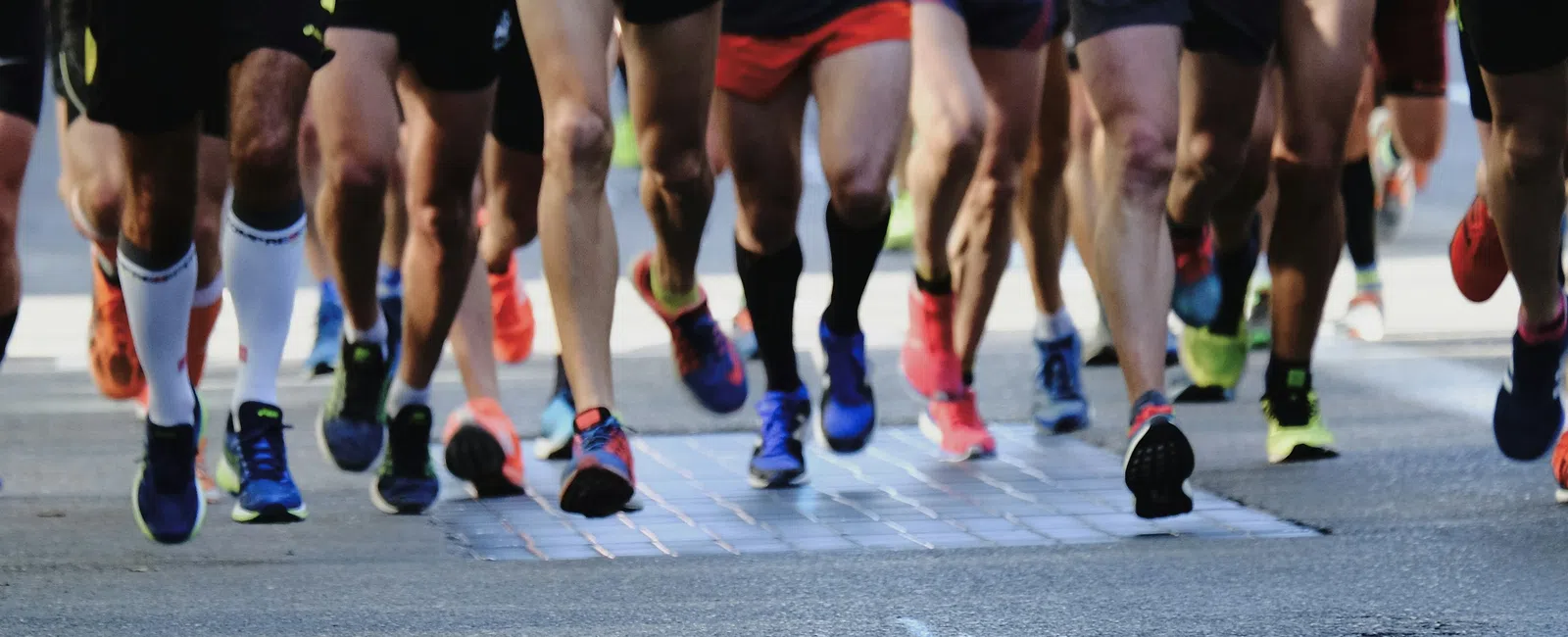
Races, festivals, parades, marathons, and community events share a common logistical challenge: they bring large numbers of people into public spaces designed for everyday vehicle and pedestrian flow. Getting participants, spectators, and vehicles moving safely and efficiently requires planning that goes well beyond setting up a starting line or booking a venue.
For many events, a traffic
management plan is not optional. Road closure permits, insurance requirements,
and coordination with local authorities all typically require a written plan
before approvals are granted. Even for events without formal requirements, a plan protects the organizer and provides a clear framework
for everyone managing the day.
What Is an Event Traffic Management Plan?
An event traffic management
plan, sometimes called an event TCP or event traffic control plan, is a written
document that describes how traffic, participants, and pedestrians will be
managed during a special event that affects public roads or right-of-way. It is
the event-specific version of the traffic control plans used in construction
and utility work zones.
The plan serves multiple
purposes. For permit authorities, it shows that the organizer has considered the event's traffic impacts and has a specific, organized
approach to managing them. For traffic control personnel, it provides clear instructions
about where to be, what equipment to use, and what their responsibilities are.
For emergency services, it documents how access will be maintained so that
fire, EMS, and law enforcement can reach any location within or adjacent to the
event if needed.
A vague or incomplete plan puts the permit at risk and creates confusion on the day. A
well-written plan is specific enough that any trained traffic control
professional can pick it up and understand exactly what the event requires.
When Is a Traffic Management Plan Required for an Event?
The short answer: any time an
event affects a public road, sidewalk, or right-of-way in a way that requires a
permit, a traffic management plan is almost certainly required as part of that
permit application.
More specifically, you will
typically need a plan when your event involves:
- A road closure or partial lane closure on a public street
- A race, walk, or parade route that crosses or travels along public roads
- Significant spectator or participant traffic that will affect normal road conditions in the area
- Use of public parking areas or lots that affect adjacent traffic patterns
- Any setup, teardown, or staging activity that requires vehicles in or adjacent to the travel lane
- An event in a venue with access from a state or county road where the road authority requires a traffic study or plan
Even for events that
technically do not require a permit, a traffic management plan is good
practice. It forces the organizer to think through scenarios that are easy to
overlook during the excitement of event planning, and it provides documentation
if an incident occurs and questions arise about how traffic was being managed.
|
Note: Permit requirements vary significantly by jurisdiction. A 5K on residential streets in one city may require only a simple permit and a flagger at key intersections. The same event in another city may require a full traffic management plan reviewed by the DOT and coordinated with police. Confirm requirements with each road authority involved in your route early in the planning process. |
Core Components of an Event Traffic Management Plan
A complete event traffic
management plan addresses several distinct areas. The required level of detail depends on the scale of the event and the specific requirements of the
permit authorities involved.
Event overview and scope
The plan opens with a clear
description of the event: what it is, when it takes place, the expected number
of participants and spectators, the general location, and the organizer's
contact information. This section gives permit reviewers and event-day personnel
the context they need to understand everything that follows.
Route map and road closure diagram
A clear, to-scale diagram
showing the event route, all road closures, detour routes, spectator areas,
start and finish locations, and any staging or vehicle access zones is the most
referenced element of the plan. Traffic control personnel use it to confirm
their position. Permit reviewers use it to evaluate the impact on surrounding
traffic. Emergency services use it to understand how the road network will be
configured during the event.
The diagram must show streets
by name, indicate the direction of traffic flow and participant movement, and
mark every point where a road is closed, a lane is restricted, or a detour
begins. Vague sketch maps do not satisfy most permit requirements and create
confusion on the day.
Traffic control device placement
For each point where traffic
will be managed, the plan must specify what devices will be used and where they
will be placed. This includes advance warning signs, cones or barricades
marking closures, directional signs for spectators and vehicles, and any
variable message signs or arrow boards directing traffic away from the event
route.
Device placement must comply
with MUTCD standards for the road type and posted speed. For high-speed roads,
the advance warning distances are longer and the device requirements are more
specific. Permit reviewers familiar with the MUTCD will flag noncompliant placement before approving the plan.
Flagger and officer positions
The plan must identify every
location where a traffic control flagger or off-duty police officer will be
stationed, what their specific responsibilities are at that position, and how
they will communicate with other personnel. A race with multiple intersections
may require flaggers at each cross street, officers at intersections with
active traffic signals, and a roving supervisor communicating by radio with the
entire team.
For signalized intersections
where the event route crosses, sworn officer presence is typically required
because only officers have the legal authority to direct traffic against the
signal indication. Flaggers can manage non-signalized intersections and access
control points. Knowing early in the planning process which intersections require officers versus flaggers affects both the budget and the lead time for
coordination.
Participant and spectator flow
Participants and spectators
create pedestrian traffic that must be managed as carefully as vehicle traffic.
The plan should address how participants will stage before the event, how
spectators will access viewing areas, how participants will move through the
finish area after completing the event, and how both groups will safely
disperse to parking areas after the event ends.
The post-event dispersal phase
is one of the most commonly underplanned elements of event traffic management.
A race that finishes in 90 minutes may generate two hours of foot and vehicle
traffic as participants collect medals, meet family members, and return to
parking. Traffic control coverage during this phase is as important as coverage
during the event itself.
Vehicle access and parking plan
The plan should specify how
vehicles, including event support vehicles, participant drop-off, spectator
parking, and vendor access, will be managed before, during, and after the
event. Roads that are open to event-related vehicles but closed to general public
traffic must be clearly identified, and the access control method must be
specified.
For large events with
significant parking impacts, a separate parking and traffic circulation plan
may be required. This document maps vehicle flow from the nearest highway or arterial through parking areas to the event site and back out, identifying pinch points where congestion is likely and the traffic control measures that will address them.
Emergency vehicle access
Permit authorities and emergency
services will scrutinize the plan for how fire, EMS, and law enforcement
vehicles can reach any location within or adjacent to the event area if needed.
The plan must show clear emergency access corridors that are maintained
throughout the event and specify how traffic control personnel will manage the
corridor if an emergency vehicle needs to use it.
For events that fully close a
road, this may require staging an emergency response vehicle inside the closed
area or designating a specific route that traffic control personnel can open on
demand. This is a non-negotiable element for most permit authorities, and plans
that do not address it clearly will not be approved.
Contingency procedures
The plan should address what
happens when things do not go as planned. A medical emergency requiring an
ambulance. Weather that forces the event to pause or stop early. A participant
count that significantly exceeds expectations. An equipment failure at a key
traffic control position.
Contingency procedures do not
need to be exhaustive, but the plan should demonstrate that the organizer has
considered the most likely deviations from the base plan and has a response for
each. This gives permit reviewers confidence that the organizer is prepared and
gives event-day personnel a reference when decisions need to be made quickly.
Planning Timeline: How Far in Advance to Start
Traffic management planning takes longer than most organizers expect, mainly because the permit process involves multiple agencies that operate on their own timelines and have their own review requirements. Starting early is the most effective way an event organizer can reduce planning stress and permit delays.
|
Lead Time |
What to
Handle |
|
90+ days out |
Identify the route and all
road segments involved. Research permit requirements for each jurisdiction.
Contact your traffic control provider to begin planning. |
|
60-90 days out |
Submit permit applications
with all required road authorities. Finalize the traffic control plan.
Confirm officer and flagger requirements with your provider. Begin public
notification if required. |
|
30-60 days out |
Receive permit approvals.
Finalize staffing and equipment. Coordinate with police, fire, and EMS on
event safety plan. Confirm setup and teardown logistics with traffic control
crew. |
|
2-4 weeks out |
Confirm all permit
conditions are met. Brief event staff on traffic control procedures. Finalize
contingency plans for weather or participant count changes. |
|
Event week |
Conduct final walkthroughs
of the route. Confirm crew and equipment deployment schedule. Distribute
event-day contact sheet to all parties. |
|
Event day |
The traffic control crew sets up per the approved plan. Flaggers and officers at all designated positions
before participant or spectator arrival. Teardown begins after all
participants and spectators have cleared. |
Traffic Management Considerations by Event Type
Road races: 5Ks, 10Ks, and half marathons
Out-and-back and loop courses
require flaggers at every intersection where participants cross or travel along
vehicle-accessible roads. The start and finish areas typically require the most
intensive traffic control, as large numbers of participants, spectators, and
support vehicles converge in a concentrated area. Post-race dispersal from the
finish area is often the most chaotic phase and needs dedicated coverage.
Marathons and full-distance events
Marathon courses cover
significantly more distance and often cross more jurisdictions than shorter
races. The longer course means participants are on the road for longer, requiring traffic control personnel to maintain positions for
several hours. Rolling road closure techniques, where a vehicle formation
gradually clears the course ahead of the final participants, are commonly used
in the later stages of marathon events.
Parades
Parades involve a moving
procession of vehicles, floats, and performers traveling a fixed route through
public streets. Traffic control is required at every cross street along the
route to stop vehicle traffic while the parade passes. Parades also generate
significant spectator crowding along the route, which creates pedestrian
management challenges at every cross street and intersection. The lead and tail
of the parade must be clearly identified so traffic control personnel know when
the procession has passed their position, and they can release waiting traffic.
Festivals and outdoor events
Festivals that do not involve a
participant route still generate significant traffic impact through parking
demand, pedestrian movement between parking areas and the venue, and the
concentrated arrival and departure peaks at the beginning and end of the event. Festival traffic management focuses primarily on the surrounding road
network and parking circulation rather than participant routing.
Cycling events
Cycling events on open roads
involve participants traveling much faster than pedestrians, which changes the traffic control approach. Cyclists moving at 20
to 25 mph require more advance warning for approaching vehicle traffic than
pedestrians, and the gap between the lead and tail of the field can be very
large for longer events. Course marshals positioned throughout the route
supplement the formal traffic control setup.
Triathlons
Triathlons combine swim, bike,
and run segments, each with different traffic control needs and often in
different locations. Transition areas where participants move between
disciplines create concentrated pedestrian and support vehicle activity. Bike
courses on open roads require the same approach as cycling events. Run courses
on closed or partially closed roads require flaggers at cross streets.
Coordinating traffic control across multiple disciplines and locations requires
careful logistical planning.
Working with a Traffic Control Company on Your Event Plan
Most event organizers are not
traffic control professionals and shouldn't have to become one to run
a safe event. A traffic control company with special-event experience brings the technical knowledge, permit relationships, and field personnel to handle the traffic-management side of the event so the organizer
can focus on everything else.
What to bring to the first conversation
Before contacting a traffic
control provider, gather as much information as you have about the event: the
proposed route or layout, the event date and start/finish times, the expected
number of participants and spectators, and the general location. The more
specific the information, the more accurate the initial plan and cost estimate
will be.
What the traffic control company handles
An experienced event traffic
control provider manages the traffic control plan design, permit applications, and coordination with road authorities, officer and flagger staffing, equipment
procurement and placement, event-day operations, and teardown. For the
organizer, the relationship becomes a single point of contact that manages all the traffic control complexity.
Lead time requirements
The most common mistake event
organizers make with traffic control is waiting too long to engage a provider.
For large events or those with complex permit requirements, engaging a traffic
control company three to six months in advance is not excessive. For smaller
events on lower-traffic roads, four to six weeks is often workable. The permit
timeline, not the traffic control setup timeline, is usually the constraint.
What certification to look for
All traffic control personnel working a special event should hold current ATSSA certification. For events that require officer presence at signalized intersections, confirm that the provider has established relationships with off-duty officers in the relevant jurisdiction. AQC maintains those relationships across our five-state service area and regularly staffs combined officer and flagger deployments for events of all sizes.
AQC Manages Event Traffic Control Across the Southeast
AQC Traffic Control has managed
traffic for hundreds of events across the Southeast, from neighborhood 5Ks to
major marathons and multi-day festivals. We develop event traffic management
plans, coordinate permits with road authorities, staff certified flaggers and
off-duty officers, and manage the full traffic control operation on the day.
If you are planning an event in Georgia, Alabama, Tennessee, Florida, or South Carolina that will affect public roads, contact AQC early in your planning process. The sooner we are involved, the smoother the permit process and the more options we have for route design and staffing.