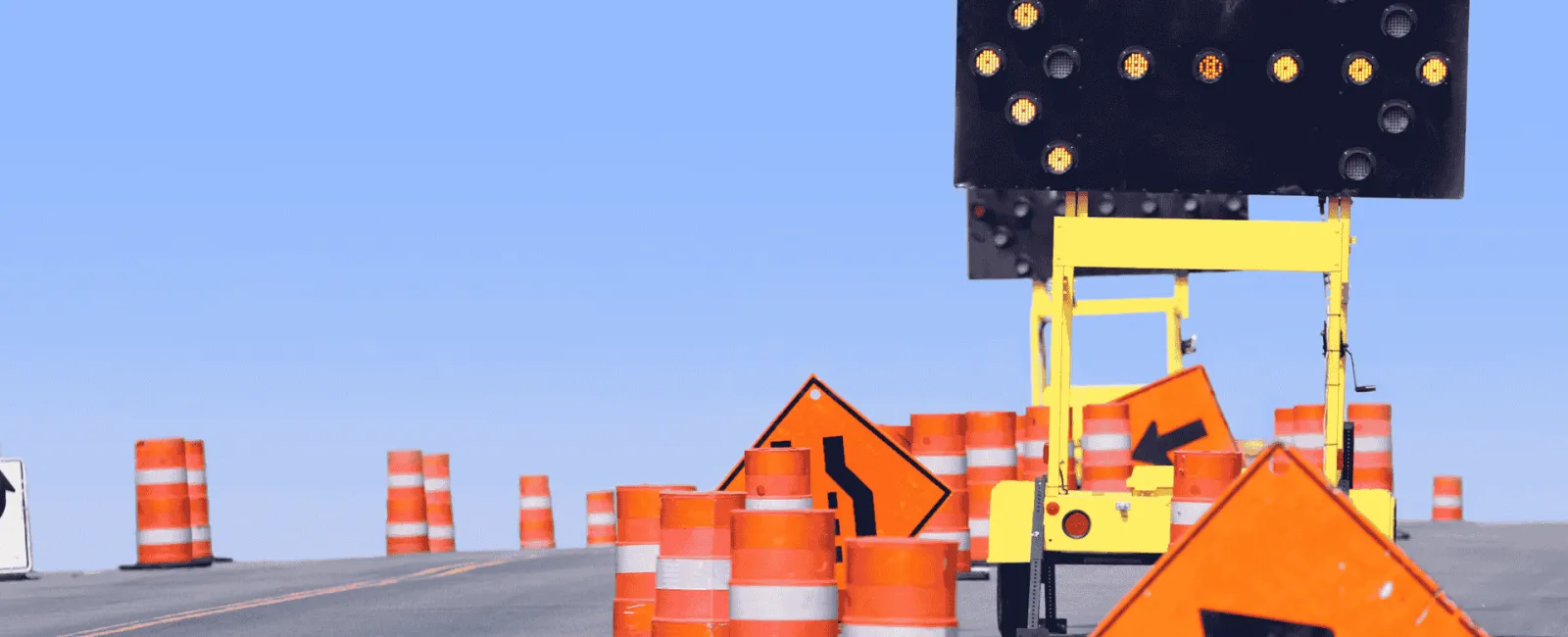
Every day, our traffic control crews work alongside Georgia's highways and city streets, setting up work zones and protecting construction workers. We've seen countless close calls in the industry, drivers speeding past our flaggers with mere inches to spare, vehicles weaving through lane closures without slowing down, and far too many moments where Georgia's Move Over Law was the only thing standing between traffic control and serious injury.
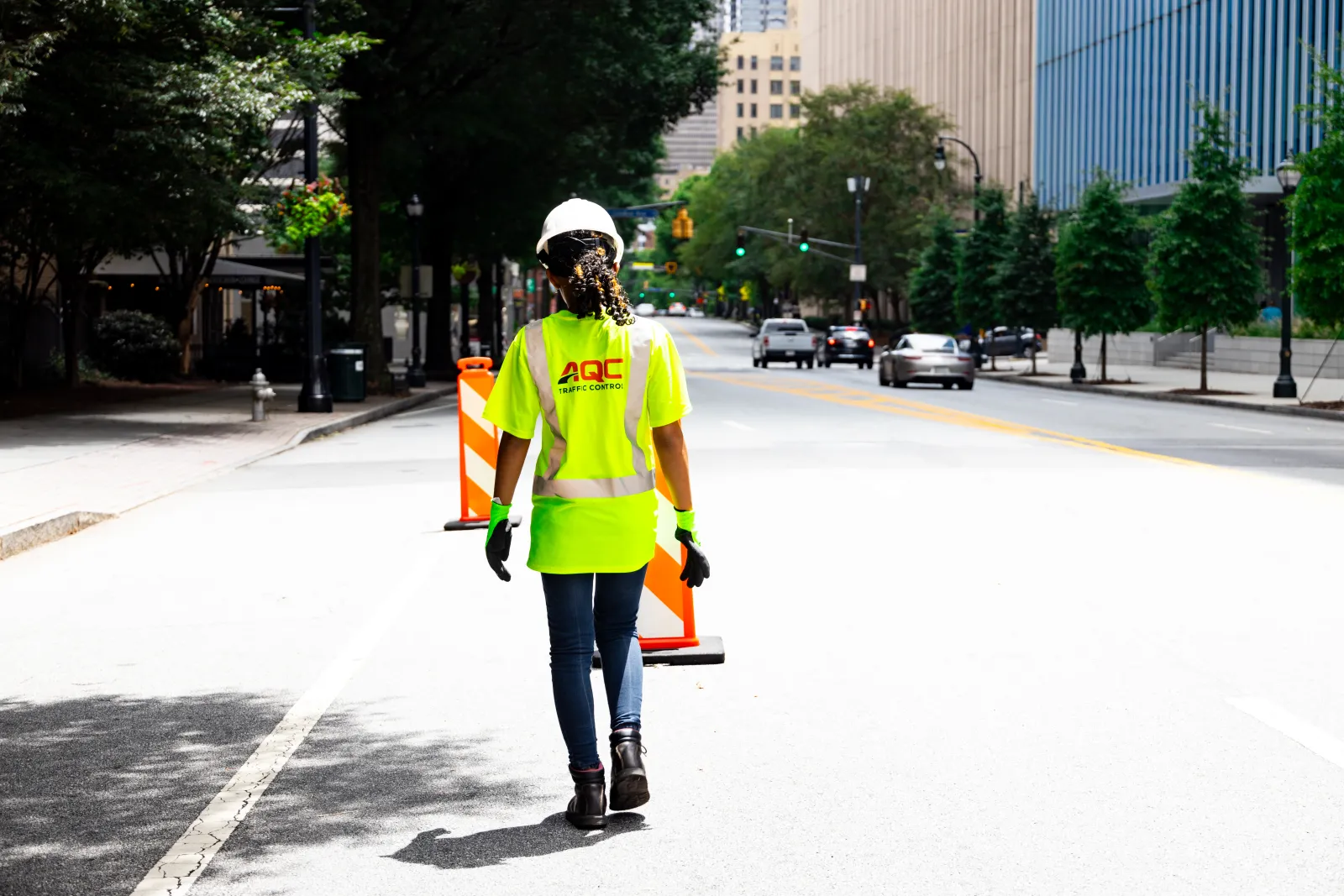
As Atlanta's premier traffic control company, we're not only familiar with Georgia's Move Over Law, but we also rely on it. It's the difference between our crews going home safely at the end of their shift or becoming another statistic in work zone accidents.
What Is Georgia's Move Over Law?
Georgia's Move Over Law, codified under OCGA § 40-6-16, requires drivers to move over or slow down when approaching stationary emergency vehicles, utility vehicles, and road maintenance crews displaying flashing lights. Enacted in 2003 and expanded several times since, this law protects the individuals who maintain Georgia's roads, ensuring their safety and the operational integrity of these roads.
The law is straightforward: when you see flashing yellow, amber, white, red, or blue lights on the roadside, you must take action. Whether it's a police officer conducting a traffic stop, an ambulance responding to an emergency, a utility crew repairing power lines, or our traffic control teams managing lane closures, the requirements are the same.
Who Does Georgia's Move Over Law Protect?
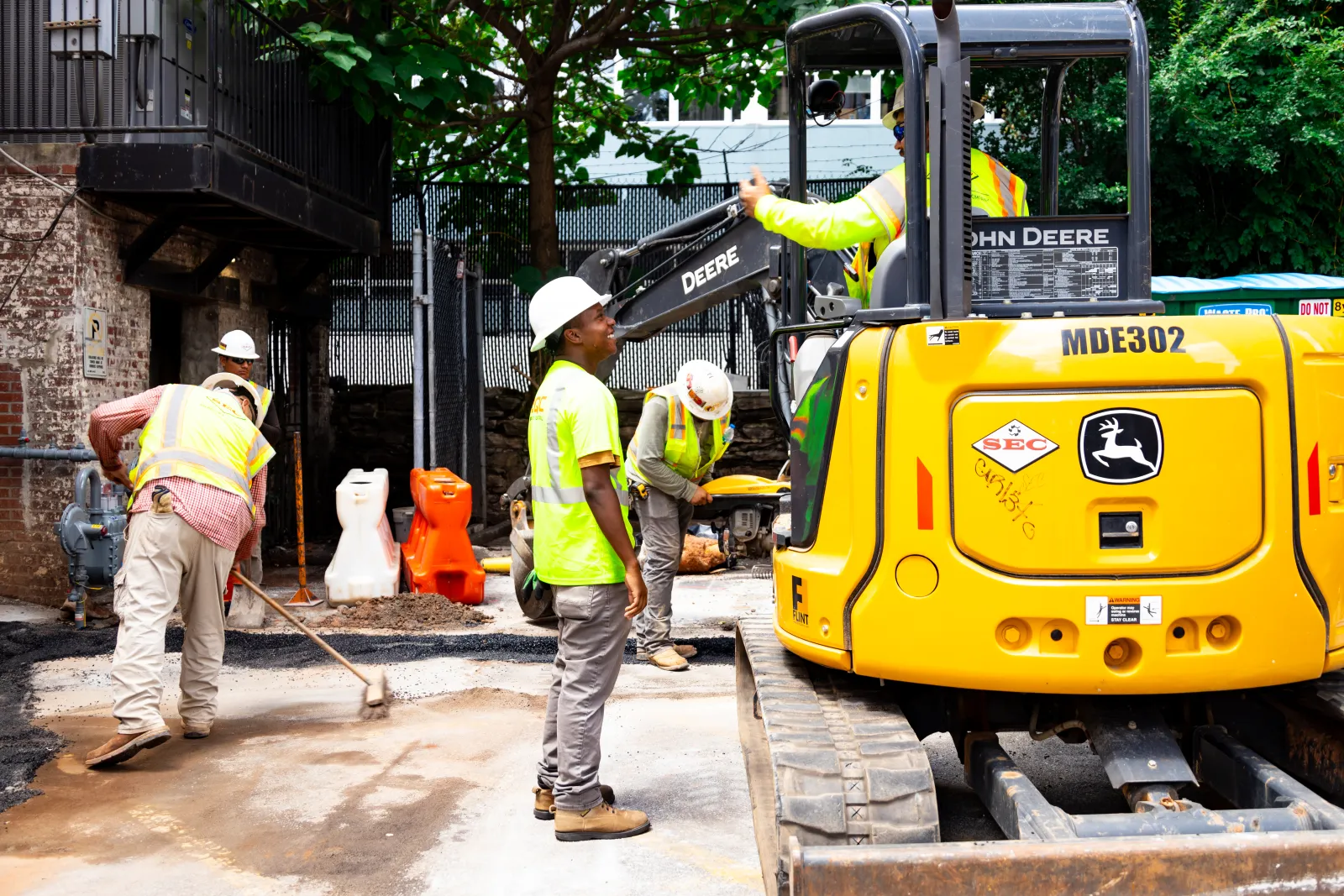
The law protects a wide range of roadside workers and emergency personnel, including:
- Emergency responders: Police officers, firefighters, EMS personnel, and emergency medical technicians
- Utility workers: Crews working on electric, gas, water, telecommunications, and other utility infrastructure
- Road maintenance crews: Georgia Department of Transportation (GDOT) workers and contractors
- Traffic control personnel: Flaggers, traffic management teams, and work zone safety crews
- Tow truck operators: Recovery and towing service providers
- Sanitation workers: Waste collection and street cleaning crews
What Georgia's Move Over Law Requires Drivers to Do
The requirements under Georgia's Move Over Law depend on the road configuration and traffic conditions. Understanding these requirements can save lives, including the lives of our traffic control professionals who work in these zones daily.
On Multi-Lane Highways
When traveling on a highway or road with two or more lanes going in the same direction, drivers must:
- Move over to a non-adjacent lane if it's safe to do so
- If moving over isn't possible due to traffic, weather, or road conditions, drivers must slow down to a reasonable speed below the posted limit
From our perspective, managing traffic control operations across metro Atlanta, we can immediately tell which drivers understand this law and which don't. The ones who move over early, signal properly, and give our work zones a wide berth make all the difference in keeping our teams safe.
On Single-Lane or Undivided Roads
On roads where moving over isn't an option, such as single-lane roads or when traffic prevents a lane change, drivers must:
- Reduce speed to a reasonable level below the posted speed limit
- Be prepared to stop if necessary
- Proceed with caution past the emergency or work zone
Move Over Law Penalties and Fines in Georgia
Georgia takes violations of the Move Over Law seriously, and the penalties reflect the danger that non-compliance creates for roadside workers. As of 2025, here's what drivers face for violating the Move Over Law in Georgia:
Standard Violations
A first-time violation of Georgia's Move Over Law results in:
- Fine up to $500
- Three points on your driving record
- Potential increase in insurance premiums
Violations Causing Injury or Death
If a driver violates the Move Over Law and causes injury to an emergency responder, utility worker, or road crew member, the penalties escalate significantly:
- Misdemeanor charge
- Fine between $500 and $1,000
- Potential jail time
- Mandatory community service
If the violation results in death, the driver may face felony charges with even more severe consequences.
These aren't just numbers on a page for us. We've had crew members injured by drivers who failed to slow down or move over. Every penalty exists because someone, somewhere, lost their life while simply trying to do their job. When you see our certified flaggers directing traffic, remember that your compliance with this law directly protects their safety.
Why the Move Over Law Matters: A Traffic Controller's Perspective
We've been providing professional traffic control services in Georgia since 2017, and in that time, we've managed thousands of work zones across the state. Our ATSSA-certified flaggers have seen everything, from drivers who give us plenty of space to those who seem to view our safety cones as a suggestion rather than a boundary.
The Reality of Working in Traffic
When you're standing in a lane closure holding a stop/slow paddle, watching vehicles approach at highway speeds, you develop a deep appreciation for the Move Over Law. Our flaggers can tell within seconds whether a driver sees them, whether they're going to slow down, and whether they're taking the situation seriously.
The drivers who move over early? They're the ones who allow our crews to work efficiently and focus on the job at hand rather than worrying about their personal safety. The ones who wait until the last second to change lanes or barrel through at full speed? They're the reason we invest heavily in high-visibility safety equipment and continuous training.
How to Comply with Georgia's Move Over Law
Compliance with the Move Over Law is straightforward, but it requires attention and advance planning. Here's what you should do when you see emergency or work zone lights ahead:
Stay Alert and Scan Ahead
The best way to comply with the Move Over Law is to see the situation developing before you're upon it. Watch for:
- Flashing lights in the distance
- Traffic is slowing ahead of you
- Construction signs warning of upcoming work zones
- Traffic control devices like cones, barrels, or arrow boards
Move Over When Safe
If you're on a multi-lane road:
- Check your mirrors and blind spots
- Signal your lane change early
- Move to the farthest lane from the emergency vehicle or work zone
- Maintain a safe speed
Slow Down If You Can't Move Over
When traffic or road conditions prevent a lane change:
- Reduce your speed significantly below the posted limit
- Be prepared to stop if directed by emergency personnel or flaggers
- Keep your full attention on the road, no phones or distractions
- Watch for workers or equipment entering the roadway
Follow Flagger Directions
When our professional flaggers are directing traffic, they have the authority to override the normal rules of the road. If a flagger signals you to stop, you must stop even if you have a green light or the right of way under normal circumstances. Our crews undergo extensive ATSSA certification training to ensure they manage traffic safely and efficiently.
Common Questions About Georgia's Move Over Law
Does the Move Over Law apply at night?
Yes, the Move Over Law applies 24/7, regardless of time of day. In fact, nighttime work zones can be even more dangerous due to reduced visibility, making compliance even more critical. Many of our traffic control operations take place at night to minimize disruptions to daytime traffic.
What if I'm in heavy traffic and can't safely move over?
The law recognizes that moving over isn't always possible. In heavy traffic, simply reduce your speed and proceed with caution. The key is to slow down enough that if something unexpected happens, you have time to react.
Do I have to move over for work trucks without flashing lights?
The Move Over Law specifically applies to vehicles with activated flashing, rotating, or oscillating lights. However, you should always exercise caution around any roadside workers, regardless of whether lights are present.
What counts as "slowing down to a reasonable speed"?
Georgia law doesn't specify an exact speed reduction, but "reasonable" generally means slowing down enough to safely navigate the situation. Many work zones post reduced speed limits; follow those posted speeds at a minimum. A good rule of thumb is to reduce your speed by at least 10-20 mph when passing roadside workers.
Does the Move Over Law apply to both sides of a divided highway?
On divided highways, the Move Over Law applies to your direction of travel. However, it's still wise to be aware of emergency vehicles and work zones on the opposite side, as responders sometimes cross the median.
The Move Over Law and Traffic Control Operations
At AQC Traffic Control, the Move Over Law is an integral part of every traffic management plan we create. When we design work zones and traffic control setups, we build in compliance with this law from the ground up.
How We Protect Our Crews
Beyond relying on driver compliance with the Move Over Law, we take additional steps to maximize safety:
- High-visibility equipment: All our flaggers wear ANSI-compliant high-visibility safety vests and use reflective paddles and signs
- Advanced warning systems: We deploy arrow boards, warning signs, and traffic cones well in advance of work zones
- Strategic positioning: Our traffic control plans position flaggers and workers to minimize exposure to traffic
- Continuous training: Regular safety training keeps our ATSSA-certified crews updated on best practices
- Communication systems: Two-way radios allow instant communication about traffic conditions and potential hazards
Working with Law Enforcement
We regularly coordinate with the Georgia State Patrol and local law enforcement agencies on major projects. The presence of law enforcement in work zones significantly increases compliance with the Move Over Law. When drivers see a patrol car with lights activated, they're much more likely to change lanes and reduce speed, which benefits everyone working in the zone.
What Happens When Drivers Don't Move Over
We've seen the consequences of Move Over Law violations firsthand. A driver distracted by their phone, traveling at full highway speed, suddenly realizes they're passing a work zone. They swerve at the last second, creating chaos in the work area. Equipment gets hit. Workers dive for safety. What should have been a routine traffic control operation becomes a near-miss incident that shakes everyone involved.
In more serious cases, we've had crew members injured. We've seen vehicles strike traffic control devices, sending cones and barrels flying into work areas. We've watched as secondary accidents occur when one driver slams on their brakes, causing a chain reaction.
These incidents don't just affect the immediate victims. They shut down roads for hours while investigators document the scene. They tie up emergency resources that could be needed elsewhere. They traumatize witnesses and first responders. And they leave families wondering if their loved one will come home safely from work.
Moving Forward: Creating Safer Work Zones Together
Georgia's Move Over Law is strong, but laws alone don't save lives; people do. Every driver who moves over, every person who slows down, and every motorist who pays attention makes Georgia's roads safer for everyone.
For the contractors and utilities we serve, understanding the Move Over Law is crucial not just for compliance, but for the safety of everyone involved in their projects. When you hire professional traffic control services, you're not just meeting regulatory requirements; you're actively protecting your workers, the traveling public, and your company's reputation.
Our Commitment to Work Zone Safety
At AQC Traffic Control, we've built our reputation on responsive service, technical expertise, and an unwavering commitment to safety. Our ATSSA-certified flaggers not only understand the Move Over Law, but they also live it every day. They know how to set up work zones that maximize safety while maintaining traffic flow. They understand how to communicate with drivers through proper signaling and positioning.
When you work with us, you're partnering with a team that takes work zone safety personally. We don't cut corners. We don't compromise on equipment quality. And we never forget that behind every traffic control plan, there are real people whose lives depend on getting it right.
Take Action: Spread Awareness About the Move Over Law
If you're reading this as a driver, we ask you to do one simple thing: spread the word. Share this information with friends, family, and colleagues. The next time you see flashing lights on the roadside, move over or slow down, and make it a habit.
If you're a contractor or utility manager planning work that will require road access, please get in touch with us to discuss how professional traffic control services can ensure your crews' safety and your project's compliance with all Georgia regulations, including the Move Over Law. Our local expertise, responsive communication, and proven safety record make us the trusted choice for traffic control throughout metro Atlanta and beyond.
Together, we can make Georgia's roads safer for everyone, one moved-over vehicle at a time.
Need Professional Traffic Control Services in Georgia?
AQC Traffic Control specializes in work zone protection, flagging services, and traffic management throughout metro Atlanta and the Southeast. Our ATSSA-certified crews understand the Move Over Law from both sides, as the professionals who rely on it and the experts who ensure compliance in every traffic control plan we create.
Call us today at 470-480-0348 or request a quote for your next project.