Every year, hundreds of
construction workers are severely injured or worse by vehicles and equipment that should never
have reached them. OSHA tracks four categories of construction fatalities, which it calls the "Fatal Four," and struck-by incidents are the second most deadly, accounting for roughly one in four construction worker deaths nationwide.
In work zones specifically, the
threat is compounded. Live traffic is moving at speed just feet from workers
performing utility work, paving, striping, or excavation. A vehicle that drifts
or accelerates into a work zone can injure anyone in seconds. This isn't a hypothetical; it's a documented, recurring reality on U.S. highways and streets.
Understanding struck-by hazards, what they are, what causes them, and how proper traffic control mitigates
them, is essential for any contractor, project manager, or site supervisor
responsible for work zone safety. This guide breaks it down from the ground up.
What Is a Struck-By Hazard?
A struck-by hazard is any
situation where a worker is hit by a moving object, a vehicle, a piece of
equipment, a tool, falling debris, or any other projectile with enough force
to cause injury or death. OSHA defines struck-by as one of its "Fatal
Four" construction hazards, alongside falls, caught-in/between incidents,
and electrocution.
Struck-by incidents are
distinct from caught-in/between incidents, where a worker is crushed or
compressed between objects. In a struck-by scenario, the object is in motion
and contacts the worker's body. The severity depends on the object's
mass and speed, and in work zones, where vehicles can be traveling at highway
speeds, the consequences are almost always fatal.
|
Key stat: According to OSHA, struck-by hazards account for approximately 26% of all construction worker fatalities, making them the second leading cause of death in the industry after falls. |
The 4 Categories of Struck-By Hazards
OSHA organizes struck-by
hazards into four distinct categories. Each represents a different type of
moving object and a different set of contributing factors. In work zones, all
four can occur, but one category dominates.
1. Struck by a Vehicle
This is the dominant struck-by
hazard in work zones. Passenger vehicles, commercial trucks, and construction
equipment operating adjacent to or within the work zone can strike workers who
are on foot. The danger is greatest when:
- Traffic is not adequately separated from the work area
- Workers are required to be in or near the travel lane
- Flaggers are absent, improperly positioned, or not visible
- Drivers are distracted, impaired, or traveling at excessive speed
- Lane closures are not properly signed or tapered
In active work zones on public
roads, this category is responsible for the overwhelming majority of worker
fatalities. Proper traffic control, flagging, lane closures, channelizing devices, and advance warning signage exist primarily to prevent this hazard.
2. Struck by Flying Objects
Flying object struck-by incidents occur when objects are propelled through the air by tools, equipment, or environmental forces. In a work zone context, this can include:
- Debris ejected by mowers, grinders, or pavement equipment
- Material kicked up by vehicles passing through the work zone
- Tools or fasteners projected by pneumatic equipment
- Fragments from cutting, chipping, or drilling operations
The prevention strategy here
centers on PPE (safety glasses, face shields), tool guards, and keeping workers
out of the projectile path during operations. Flaggers and traffic control
personnel managing vehicle flow also need to be protected from material ejected
by passing vehicles.
3. Struck by Falling Objects
Falling-object incidents occur when materials or equipment drop from above and strike workers below. In work zone settings, this risk appears when:
- Equipment or materials are staged on elevated surfaces near the work area
- Bridge or overhead work is performed above an active zone
- Loads are being lifted or transported over worker positions
- Unsecured materials on vehicles shift or fall as they pass through
Hard hats are the primary PPE
defense against falling objects. But the more durable solution is to establish exclusion zones beneath elevated work and to require strict material securing for
vehicles transiting through the zone.
4. Struck by Swinging or Slipping Objects
This category covers objects that move unpredictably, crane loads that swing, pipes or beams that slip during rigging, or equipment buckets that rotate into a worker's position. In work zones, this risk is most pronounced when heavy equipment, such as excavators, cranes, or loaders, is operating in close proximity to workers on foot.
Strict equipment exclusion zones and spotter protocols are the primary controls. Any worker who must be in proximity to swinging equipment should be in radio or visual contact with the equipment operator at all times.
Why Work Zones Are Particularly Dangerous for Struck-By Incidents
Work zones combine nearly every struck-by risk factor into a single environment:
- Live traffic moving at speed is directly adjacent to workers
- Workers are on foot in or near the travel lane performing physical tasks
- Sight lines are restricted by equipment, barriers, and signage
- Drivers are navigating unfamiliar lane configurations while distracted
- Heavy equipment operates in the same footprint as on-foot workers
- Night work significantly reduces visibility for both drivers and workers
The Federal Highway
Administration (FHWA) reports that thousands of workers are injured in work
zone crashes each year, with a significant portion of those incidents involving
workers being struck by vehicles. The risk is not theoretical; it is among the most well-documented hazards in the construction and transportation industries.
|
Note: Work zone struck-by incidents are not random accidents. The majority are preventable when proper traffic control measures, advance warning, channelization, flagging, and speed reduction are fully implemented. |
How Professional Traffic Control Prevents Struck-By Hazards
Traffic control is not just about moving vehicles efficiently. In the context of worker safety, it is the primary engineering control that keeps vehicles separated from workers, directly mitigating the most dangerous struck-by category.
Advance Warning Signage
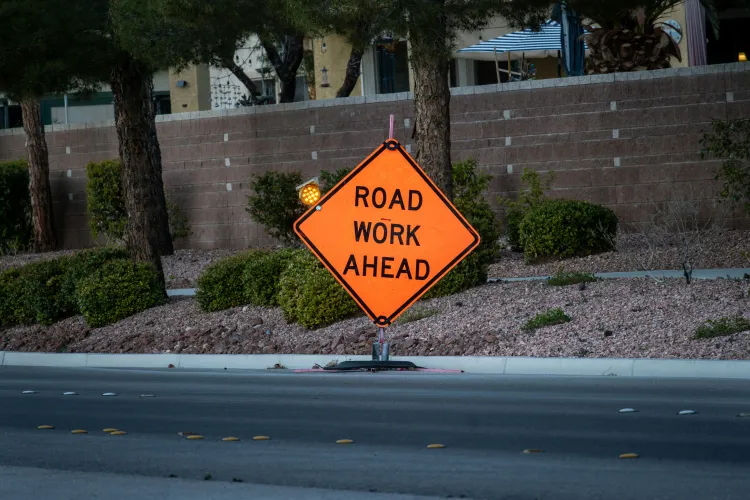
The first layer of protection begins before a driver reaches the work zone. MUTCD-compliant advance warning signs, "Road Work Ahead," "Be Prepared to Stop," and reduced speed limit signs give drivers the distance they need to reduce speed and heighten attention. A vehicle that enters the work zone at 35 mph instead of 65 mph has dramatically less potential to cause a fatal strike.
Proper sign spacing matters. The MUTCD specifies exact distances for advance warning signs based on the posted speed limit. A sign placed too close to the work area gives drivers insufficient reaction time. AQC's traffic control plans are designed to these specifications on every job.
Lane Closures and Channelization
Channelizing devices, cones, drums, barriers, and delineators physically separate the travel lane from the work space. When properly positioned, they create a buffer zone that forces vehicles away from where workers are standing and equipment is operating.
The taper, the transition zone where traffic is guided from the normal lane into the shifted path, is critical. A taper that is too short gives drivers no time to merge safely. A properly designed taper, built to MUTCD standards for the posted speed, is what makes a lane closure safe rather than just inconvenient. Lane closures are one of AQC's core services for exactly this reason.
Certified Flagging Operations
When traffic must pass through or adjacent to the work area, a trained flagger is the human element of the control system. Flaggers control traffic, stop vehicles before they reach workers, and serve as a visual presence to alert drivers that a work zone is active.
OSHA's 1926.201 standard specifies the following requirements: flaggers must be trained, must use STOP/SLOW paddles (not just flags), must wear high-visibility ANSI Class 2 or 3 garments, and must be positioned so they can be seen with adequate advance notice.
An untrained or improperly positioned flagger is not just ineffective; they can create a false sense of security that actually increases the risk of a struck-by incident. ATSSA-certified flaggers, like those AQC deploys, are trained to manage traffic flow, handle driver non-compliance, and position themselves to maximize their own safety while controlling the work zone.
Arrow Boards and High-Visibility Equipment
Arrow boards mounted on trucks or stands provide a highly visible merge directive that works even when sight lines are limited by curves, hills, or nighttime conditions. Studies consistently show that arrow boards reduce rear-end crashes in work zones, one of the most common ways vehicles strike workers from behind.
For nighttime work, the visibility stakes are even higher. High-intensity lighting, retroreflective devices, and lit channelizing equipment extend the effective warning distance and ensure drivers have adequate time to respond. AQC's equipment fleet includes arrow boards and lighting assets specifically for this purpose.
Traffic Control Plans
Every element above, warning signs, tapers, channelizing devices, flaggers, arrow boards, needs to be integrated into a coherent plan before work begins. A traffic control plan (TCP) documents the layout, device placement, personnel positions, and contingency procedures for the specific job site.
Without a TCP, individual elements may be in place but not coordinated. An advanced warning sign may be correctly placed, but the taper may not account for the actual lane geometry. A flagger may be positioned too close to traffic. A TCP designed by experienced traffic control professionals, one that reflects the specific road geometry, speed, and traffic volumes of the job, is what makes the difference between a managed work zone and an improvised one.
Why ATSSA Certification Matters for Struck-By Prevention
The American Traffic Safety Services Association (ATSSA) sets the national standard for work zone traffic control training. ATSSA certification means a flagger or traffic control supervisor has been trained in the specific techniques, device placement, flagging procedures, and emergency protocols that prevent work zone incidents.
AQC Traffic Control is ATSSA-certified, and our field personnel are trained to those standards. When you hire a traffic control company to manage your work zone, you are making a decision that directly affects whether your workers go home at the end of the shift. Certification is the minimum bar for that decision.
Beyond certification, experience matters. AQC has been operating across the Southeast since 2017, managing work zones for utilities, municipalities, contractors, and emergency response situations. That operational depth is what makes our traffic control plans effective, not just compliant.
Struck-By Incidents in Emergency Response Situations
Work zone struck-by hazards are not limited to planned construction. Emergency response situations, utility outages, accident scenes, and roadside equipment failures create improvised work zones with significantly higher risk because there is no pre-planned TCP in place.
Emergency traffic control requires the same fundamental elements: advance warning, channelization, and flagging, deployed quickly and correctly under pressure. This is one of the most demanding scenarios in traffic control, requiring experienced personnel who can read the scene, establish a safe work area, and adapt as conditions change.
AQC provides emergency response traffic control across the Southeast, available around the clock. For utilities, municipalities, and incident management teams that need immediate work zone protection, that response capability is critical to preventing secondary struck-by incidents at an already-dangerous scene.
Protect Your Workers with Professional Traffic Control
Struck-by incidents in work zones are preventable. The controls exist, the standards are clear, and the companies that implement them correctly keep workers alive. AQC Traffic Control has been providing ATSSA-certified traffic control services across Georgia, Alabama, Tennessee, Florida, and South Carolina since 2017.
Whether you need flagging services, a full traffic control plan, lane closure support, or emergency response coverage, our team is ready to build a work zone that keeps your crews protected. Contact us to get a quote for your next project.